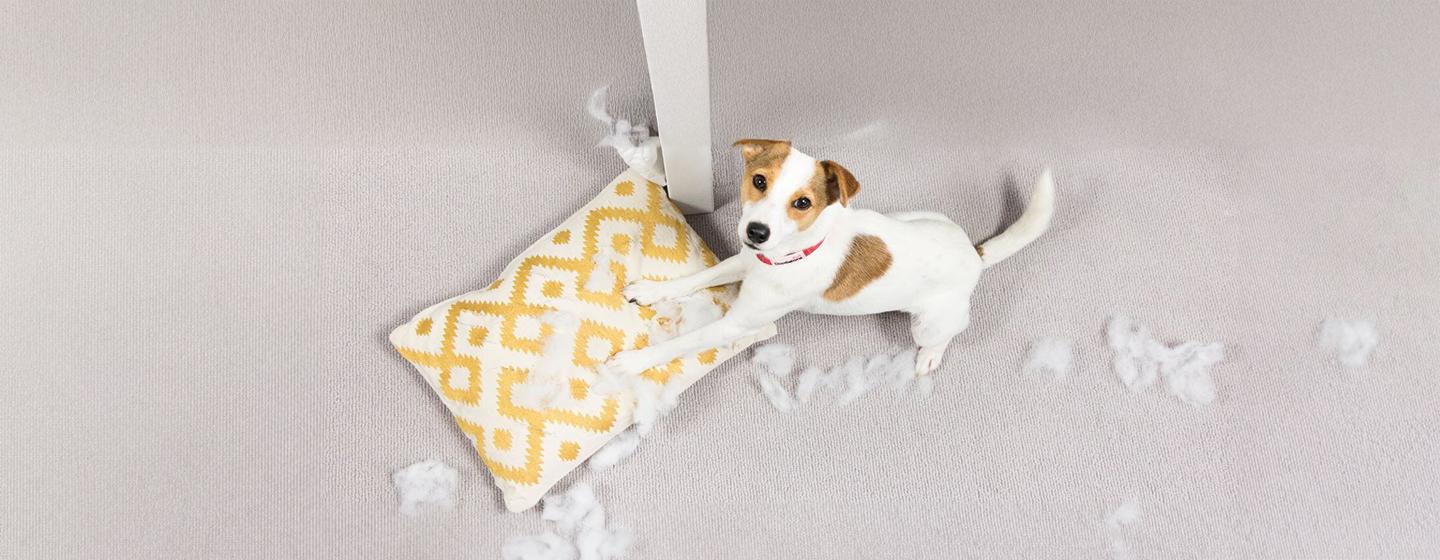
It’s only natural for your puppy to nip, mouth and jump up, but when left unchecked these can turn into serious problems that could have been avoided.
It can sometimes come as a shock to find out that your adorable new puppy does some things you would rather they didn’t – like nip, jump up and chew things.
This isn’t them being naughty, bad or aggressive in any way. In fact, these are all totally natural behaviours for a puppy. For example, your puppy is chewing as part of their exploratory games; they have to chew in order to learn. It’s up to teach them what is available for chewing and what isn’t.
So far, your puppy has only had their littermates and their mum to play and interact with so you and your family need to take on the role of teachers and playmates. This helps with the bonding process between you and your puppy and it’s important that you use the opportunity to encourage good habits from the start.
Without this, your puppy will continue all the behaviours that they have grown up thinking are acceptable, and even desirable, into adulthood. They’ll just be bigger, stronger and have adult teeth which mean your dog could accidentally cause an injury or frighten someone with their boisterous behaviour.
So when your pup comes home with you, start to teach the behaviours you’d like to see straight away. Remember though, they are not being ‘naughty’; they are just behaving the natural way that they have learned in their early weeks of life.
To teach your puppy to behave appropriately needs gentle, positive reinforcement. This means that you encourage your puppy to do the things you want them to do and reward them when they do so, usually with a tasty, healthy puppy treat, so it becomes their new default behaviour. Always reward the behaviours you’d like your puppy to repeat and if your puppy displays behaviours you’d rather not see, use our dog training guides to teach them an alternative.
Never punish your puppy verbally or physically. You will just make them fearful of you, it will damage your relationship, and it will not have the effect you desire.
Puppy biting
Puppies in a litter play together and this play will involve lots of rough and tumble and play-biting. This is how puppies learn to interact with each other and also how to limit their biting. If they bite too hard or the play gets too rough, the other puppies or their mother will stop playing with them, and so in this way, they are learning a valuable lesson about appropriate interactions with others.
Puppy teeth are sharp and their jaws are weak. This means that while bites hurt, they don’t cause injury and this helps them to learn bite-inhibition from their littermates and their mum. As a result, however the occasional painful nip might happen while you and your puppy are playing.
When your puppy comes home with you and is living in a human family, they need to be taught that games with humans don’t include teeth! You don't want puppy biting to be a continued behaviour into adulthood but you do want to teach them appropriate ways for you to play and have fun together:
• Don’t play rough games with your puppy or push them around with your hands, this is just encouraging them to use their teeth to grab at you.
• All interactions with your hands should be gentle and soothing; stroking, ear rubs, back-scratching etc. Your puppy should learn that your hands are good things and not tug toys or dog chews.
• For gentle games of tug, use toys and not your hands. Your puppy needs to chew (and when they are teething, this is ever more important) but you should be encouraging them that toys are for chewing, hands aren’t.
• Give your puppy safe toys to chew on, stuffed Puppy Kongs are great and you can even make your own toys using treats inside old cardboard toilet rolls that will let them bite and chew safely.
Even with your best intentions, your puppy will occasionally nip you. First of all, don’t over-react. Yes, it may have hurt but if you tell your puppy off, get annoyed or shout at them, you will make them scared of you, lead them to mistrust your hands, and it will break down the relationship you have.
Instead, you have several options and the option(s) you choose will depend on your puppy’s character, breed/breed mix and a bit of trial and error:
• If it was a one-off accident, ignore it and carry on playing. Everyone makes mistakes.
• If it wasn’t a one-off or if it happens again immediately stop playing and turn away from your puppy for 10 seconds so they know that if they use their teeth, the fun stops. This way they learn that if they want to play with you, they can’t use teeth.
• When you return to play, introduce a toy into the game that your puppy can bite instead.
• If the play biting continues, remove yourself totally from the game for a minute so your puppy knows that if they bite, you really will stop the game and also take away your presence.
• Don’t go for any longer than a minute, and then when you come back to your puppy, carry on as before. Dogs don’t hold grudges and neither should you.
• Sometimes play-biting happens because the puppy is frustrated, has too much energy or conversely isn’t getting enough sleep. Make sure they are getting enough positive interactions, problem-solving brain games, lots of chances to succeed and lots of opportunities for good quality undisturbed sleep.
• Make sure everyone in the household does the same thing. The puppy will just get confused if one person lets them bite and the others don’t.
• Supervise all interactions between your puppy and children to ensure that play doesn’t get too boisterous and to prevent play-biting mistakes.
• Puppies will teethe the same way as babies from around 12 weeks old up to about six months of age. Gradually their baby teeth will fall out to be replaced by their adult teeth. At this time they may have some discomfort from sore gums and teeth and may need to chew more than usual. Make sure you have safe toys that they can gnaw on, both to distract them from chewing furniture or hands, and to help relieve them from any discomfort they may be feeling. There are even some puppy teething toys you can buy that can be put in the fridge to help cool sore gums.
With some consistency and reward-based training, your puppy will soon learn that games with people need to be gentle and tooth-free.