Sorry, you need to enable JavaScript to visit this website.
Skip to main content
Do cats like music?
Do cats like music?
4 mins read
As humans we love music, but do our cats feel the same? Find out how your furry friend feels about music and the research behind it with Purina. We all like to make our pets happy, and we’ve all seen those adorable You Tube videos of our favourite superstar kitties rocking out on the piano! Listening to music can provide mental stimulation, a sense of contentment, or even just a relaxing background vibe—for humans! So it makes sense that we would want to share one our favourite pastimes with our pets—but do cats like music? And are they getting anything out of listening to it? Do cats like music? Have you ever tried to play your favourite song for your cat? You might have noticed that, no matter how hard the beat drops, your cat shows little to no interest in the music that you are playing to them. In rare circumstances, some cats have found specific music to be calming. Occasionally, cat shelters will choose to play classic music to their residents, believing that it creates a soothing atmosphere. Although cats don’t run away from music (unless you turn it up very loud!), there isn’t a lot of evidence to show that this is the case. If the cats listening to classical music are lying around having a snooze, it’s probably more likely that they were ready for a catnap, rather than lulled to sleep by the likes of Mozart!
Behaviour & Training
Do Cats Always Land on Their Feet?
4 mins read
Everyone's heard the saying 'cats always land on their feet', but is there any truth in it? Keep reading to find out how they manage to do it and the amazing science behind it. Everyone has heard the saying ‘cats always land on their feet’ and that this ability means they can survive falls from incredible heights. Some people think it’s due to cats’ incredible balance, and others secretly think it’s magic. It’s a phenomenon that has certainly puzzled scientists for centuries! But is it true, or simply an urban legend? Keep reading to find out if cats always land on their feet and how they do it. Do cats always land on their feet? Cats have an inbuilt balancing system called the “righting reflex” that allows them to orient themselves and land on their feet. But while cats are often able to land the right way up, it’s not the case that they always land on their feet. The height of the fall can affect their ability to land safely. For a long time, cats’ ability to seemingly always land on their feet has had scientists baffled. However, a French scientist called Etienne-Jules Marey in 1894 discovered this was not the case. Using a chronophotographic camera, he managed to capture 60 frames a second of a cat’s fall, then he was able to watch in slow-motion and see how cats land on their feet. How do cats land on their feet? The way cats manage to land on their feet is called the righting reflex.
Behaviour & Training
Diabetes in Dogs - Causes and Symptoms
4 mins read
Diabetes is a complex disease that most often develops in older dogs. Just like in humans, diabetes in dogs can cause a range of unpleasant symptoms. However, with careful management, this condition doesn’t need to affect their quality of life. What is diabetes in dogs? Dog diabetes, or ‘canine diabetes’, is caused by either a lack of insulin in your dog’s body or, in some cases, an ‘inadequate’ biological response to it. When your dog eats, the food is broken down. One of the components of their food, glucose, is carried to their cells by insulin. If your dog can’t produce enough insulin themselves, or the insulin they have isn’t used properly, the glucose cannot be used properly either. This means your dog’s blood sugar levels will rise, which can lead to adverse side effects. What causes diabetes in dogs? Just like in humans, it isn’t completely certain why some dogs develop diabetes. Some dogs may be more genetically prone to developing the condition. It is known, however, that being overweight can increase the risk of your dog developing diabetes. This may be because obesity causes cells in your dog’s body to become more resistant to insulin. If your dog develops diabetes, it is most likely to happen when they start to reach their senior years. Female dogs and neutered dogs may also be more at risk.
Health
Cushing’s Disease in Dogs Symptoms and Treatment
Cushing’s Disease in Dogs: Symptoms and Treatment
4 mins read
Cushing’s disease is a hormonal condition that is relatively common in middle-aged or older dogs. Read our guide to find out what it is, what’s causing it and how you can care for a dog that has been diagnosed with the disease. Your dog’s energy levels are likely to decrease as they get older, but did you know that this could point to something other than old age? In some cases, this is one of the signs of a disease known as Cushing’s Syndrome in dogs. Here is what you need to know. What is Cushing’s disease in dogs? Cushing’s disease, also known as hyperadrenocorticism, is more common in dogs over 7 years of age. The disease involves excess production of cortisol, a naturally produced steroid that is often referred to as the stress hormone. Certain levels of this hormone within the body are important and contribute to functions such as the immune system or ‘fight or flight’ response. However, the abnormally high levels seen in Cushing’s causes an imbalance of hormone regulation within the body and leads to the symptoms associated with the disease. The most common cause of Cushing’s disease in dogs is a benign tumour of the pituitary gland, a structure that is located in the brain. The pituitary gland sends messages to the adrenal glands to produce cortisol. In cases of pituitary-dependant Cushing’s disease, these messages continue to be sent to the adrenal glands even if there is already enough cortisol, leading to higher levels in the body. Less commonly, Cushing’s disease can be caused by tumours of the adrenal glands themselves, this is adrenal-dependent disease. It can also occur if a pet is receiving high doses of steroid treatment for a different medical condition. Symptoms of Cushing’s in dogs? Cushing’s in dogs will often go unnoticed for a while, and tends to progress very gradually. Because the disease affects middle-aged and senior dogs, the symptoms are often attributed to ageing at first. Cortisol is a vital hormone for different functions and organs, meaning that it acts in various ways around the body. Therefore, increased production of the hormone can affect a number of different body systems, and result in various symptoms many of which are non-specific. The list of symptoms of Cushing’s in dogs will differ between individuals and you should consult the vet even if you don’t notice all the signs listed below.
Health
COVID-19 and Cats and Dogs: All You Need to Know
1 min read
With the outbreak of coronavirus, many pet owners have been wondering what this new normal could mean for them and their pets. Find out all you need to know about caring for your pets and how to look after them during this uncertain time. You ask, we answer! Find here our answers to FAQs related to COVID-19 and Pets. Where can I find the latest information about Covid-19 and pets? Since this is a rapidly evolving situation, we encourage you to keep up to date with communications from official and credible sources such as World Small Animal Veterinary Association (WSAVA) and the World Organization for Animal Health (OIE). Is Purina able to produce pet food and treats during this crisis? Purina’s products (pet food and pet snacks) are included in the list of industries considered as “essential critical infrastructure”. As a result, Purina is exempt from closures or stay-at-home orders. Purina is taking significant steps to ensure that we can service our consumers at the highest levels possible.
Health
Coprophagia in Dogs
Coprophagia in Dogs
3 mins read
No one likes to admit that their dog eats faeces, but many do and as a dog owner you may want to understand why they do it, and what you can do about it.
Health
Coping with Limb Amputation in Dogs
5 mins read
Many of us have probably seen a three-legged dog before – and chances are, they were happy. Whether it’s the result of accident or disease, limb amputation in dogs is common, and dogs are great at coping with it. Although it involves major surgery, amputation can actually help dogs, rather than hinder them, by removing their source of pain and suffering. Limb amputation in dogs is designed to make their life better, after all, and will only take place if your vet thinks the procedure can achieve this. Most dogs will happily adjust to life on three legs with your help and your vet’s advice. In fact, they’ll often be so busy running around, chasing balls and playing ‘fetch’ that they hardly notice anything’s wrong. How will my dog cope with amputation surgery? Limb amputation in dogs, although difficult to think about at first, could do your severely injured pet a lot of good. In fact, dog amputation surgery may often be the best option for canines with severe injuries from car accidents, other accidents, or for those suffering from bone cancer or other serious diseases. Of course, it may not be easy for your dog to learn how to move around as they once did. The absence of a limb makes normal movement a bit of a task, and your dog will have to learn how to make up for it before they become their usual, bouncy selves again. However, with time, most can compensate for the changes in weight distribution and learn to walk and even run again. With time and understanding, they could soon be running around in the garden or in the park – just as they used to.
Health
Coping with Blindness in Cats
4 mins read
Of course not all cats go blind, and if they do they can still lead a wonderful, fun-filled life. However, if you realise your cat is going blind, there are a few changes you should make to help them out. Your cat has a wonderful life with all the love and attention you give them, whether they spend their time prowling the great outdoors or prefer to snuggle up on your lap in the house. Despite your care, however, there are some things you can’t control as an owner, including the possibility of blindness in your cat. What are the causes of cat blindness? Your cat may start to lose their sight for a variety of reasons, including old age. Inherited causes of cat blindness are less common than they are in dogs, but they tend to occur more in purebred cats. For example, if you are lucky enough to have a lovely, silky Abyssinian cat, you are more likely to see blindness caused by progressive retinal atrophy (although a genetic test is available for this). Medical causes for adult or senior cats losing their sight are more common than genetic ones. These include trauma, neurological problems, and high blood pressure. Cats compensate for impaired vision by relying more on their remaining senses, especially smell. How can I tell if my cat is blind? If your older cat loses their sight, chances are it happens so gradually you won’t notice anything until the loss is total. This isn’t your fault – cats can compensate for their impaired vision by relying on their other senses. This is particularly true of their sense of smell, which is why they might happily wander up to you when you serve their meals, even if they can’t see properly.
Health
Coping with Amputation in Cats
5 mins read
No pet owner wants a time to come when they have to think about cat amputation, but if your cat’s had an accident or is unwell and surgery can stop their pain, it can be the kindest thing to do. Amputation sounds drastic but it’s a much more common procedure than it once was and, although it involves major surgery, disabled cats can cope very well without a tail or on three legs, once they’ve had time to readapt. So there’s no reason why your handicapped cat shouldn’t live a life that’s filled with as much love and happiness as any of their other feline friends. Cat tail amputation When might my cat need their tail amputated? As cats' tails are long and energetic, they’re prone to accidents, and injuries. Your vet may be able to treat some of the less serious problems but in some cases they may decide that a severely damaged tail needs to be amputated. How will tail amputation affect my cat? Cat tail amputation is a relatively straightforward operation, and although your furry friend may take some time getting used to living without a tail, you can feel reassured that the operation is unlikely to have a long-term impact on their behaviour. Limb amputation in cats When might my cat need a limb amputated? Your vet will recommend limb amputation if, for example, your cat’s leg has been very badly injured in an accident or if they’ve discovered a cancerous tumour on a limb, and removing it completely can stop the illness from spreading. How will limb amputation affect my cat? Losing a leg might sound like a drastic measure but many cats continue to live a very happy life on three limbs without any problems. After the operation, your cat will need to recover from the surgery and then learn how to walk and run again, as their weight distribution will have changed. Your vet will be able to give you lots of help and advice on how you can both cope during these first few weeks.
Health
Cats and Catnip
6 mins read
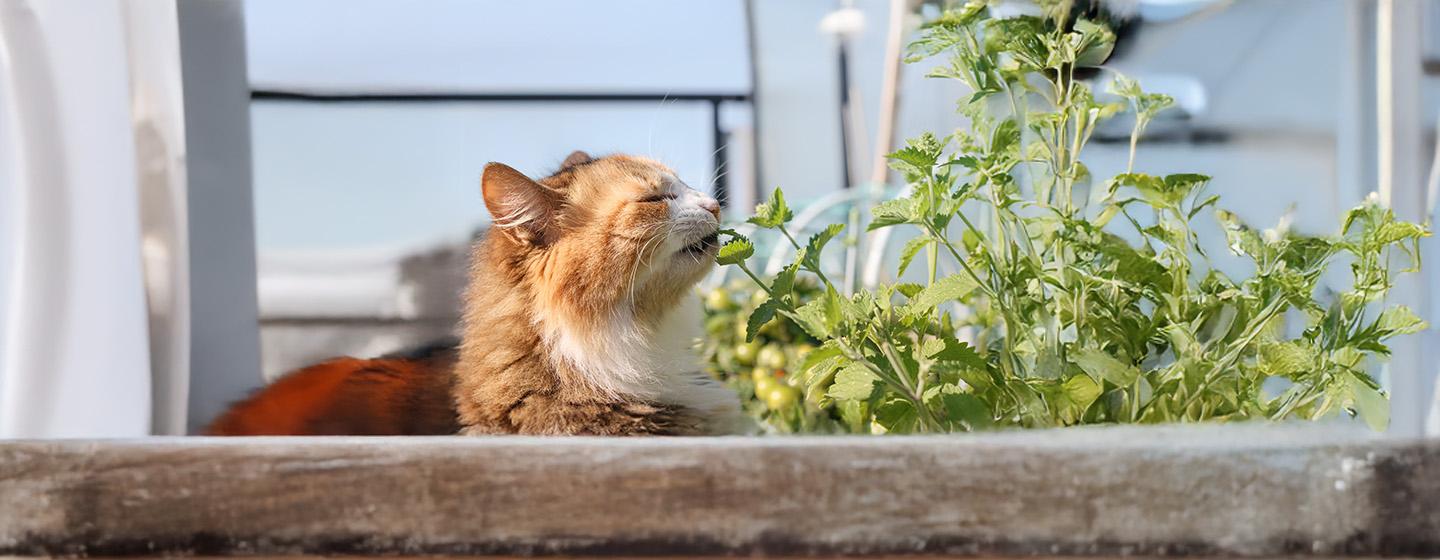
Sprinkle some catnip near to your kitten and you’ll notice a sudden change in behaviour. Find out more about this plant and why it’s got such an effect on your fluffy feline. Catnip seems to be adored across the feline kingdom with both big and small cats falling head over heels for this plant’s allure. But what does catnip do to cats? Does it have any effect on us humans? And is it safe or not? We’re unravelling all the catnip mysteries below. What is catnip? Catnip (or as it’s officially known Nepeta cataria) is a herb from the mint family. Originally common in a few areas of Asia and Europe, it has managed to spread to most corners of the world. You might have noticed it growing next to country roads or even as a drought-resistant addition in people’s gardens. What does catnip do to cats? Let your cat near this plant and you’re in for a reaction of pure joy. As your cat will start to lick and rub against it, you will notice their reaction turning into something that looks wild and strange. In a bout of hyperactivity they might start stretching, drooling or jumping. Other cats will go for a wild run up and down the room. More docile or sedated reactions have also been noticed – the response depends on the individual cat. The effects of catnip are temporary and usually wear off within half an hour, as your cat becomes briefly immune to the effects. It’s also common for cats to sit quite still after a euphoric reaction, until the effects wear off.
Behaviour & Training

Pagination

  • First page
  • Previous page
  • …
  • Page 15
  • Page 16
  • Page 17
  • Page 18
  • Page 19
  • Page 20
  • Page 21
  • Page 22
  • Page 23
  • …
  • Next page
  • Last page
Purina Pet Club logo

Join Purina Pet Club for expert tips, helpful advice, exclusive offers and rewards.

Join The Club
Nourishing pets Purina pets grid card
Purina Pet Club logo

Join Purina Pet Club for expert tips, helpful advice, exclusive offers and rewards.

Join The Club
Nourishing pets Purina pets grid card
  • Cat
    • Care & Advice
    • Find a Pet
    • Food
    • Our Brands
  • Dog
    • Care & Advice
    • Find a Pet
    • Food
    • Our Brands
  • About Us
    • Our Mission
    • Our History
    • Our Purina Promise
    • Purina In The Community
  • Other
    • Join Purina Pet Club
    • Breed Selector
    • Contact Us

©Reg. Trademark of Nestlé S.A.

Terms & Conditions
Privacy Policy
© 2026 Purina. All Rights Reserved.

©Reg. Trademark of Nestlé S.A.

Terms & Conditions
Privacy Policy
© 2026 Purina. All Rights Reserved.