Zoomed product photo

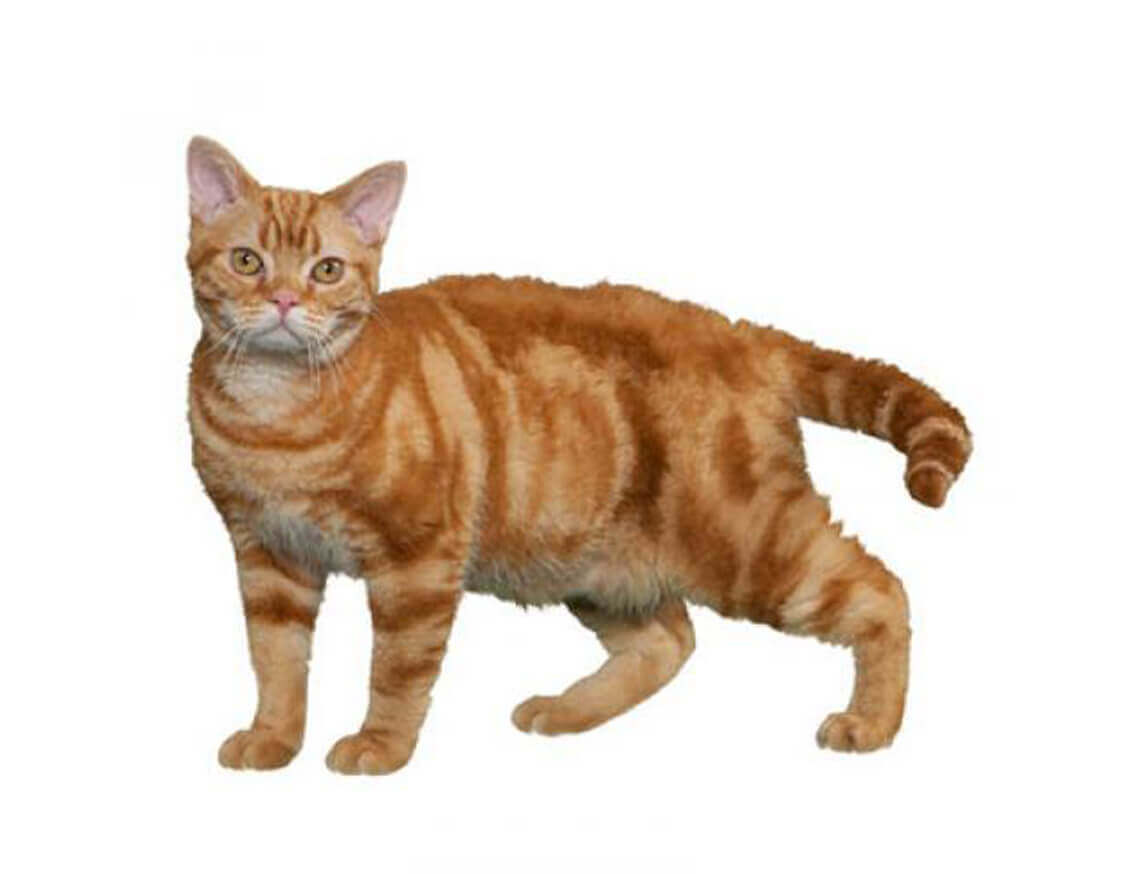
American Wirehair

As its name suggests, it's the coat that characterises this American Wirehair cat breed. The American Wirehair is on the large size and has a harsh, springy and wiry coat - each short-to-medium hair is thin and crimped, or hooked. The whiskers are often curly. The full extent of the 'wiring' only becomes apparent when the cat is mature; American Wirehair kittens that appear to have very curly coats when they are young can grow up into merely wavy, rather than wiry adults, and vice versa. They come in all sorts of colours, patterns and markings.

The need-to-know

  • Highly active and inquisitive cat
  • Friendly but independent cat
  • Somehow talkative cat
  • Average build cat breed
  • Requires grooming once a week
  • Outdoor cat
  • Great family cat
Personality

The American Wirehair cat is friendly and laid-back. It is relaxed, sweet natured, gentle and playful, enjoying toys, and games with its owner. This is not a particularly talkative cat breed.

History and Origins

Country of Origin: America

The American Wirehair cat breed began as a spontaneous mutation in a litter of New York farm cats in 1966 when one wirehaired kitten (named Adam) was produced among normal coated littermates. All American Wirehair pedigree cats can be traced back to Adam. The American Wirehair cat has become popular in the USA and Canada, but is little known elsewhere and is not a recognised show breed in the UK.

Nutrition and Feeding

Every cat is unique and each has their own particular likes, dislikes, and needs when it comes to food.  However, cats are carnivores and every cat must obtain 41 different and specific nutrients from their food. The proportion of these nutrients will vary depending on age, lifestyle and overall health, so it's not surprising that a growing, energetic kitten needs a different balance of nutrients in her diet than a less active senior cat. Other considerations to bear in mind are feeding the right quantity of food to maintain 'ideal body condition' in accordance with feeding guidelines and catering to individual preference regarding wet or dry food recipes.

Other Information

Health and common issues

American breeders claim that the American Wirehair cat is a robust breed with few health problems. This cannot be confirmed in the UK population due to a lack of numbers.

Best cat breeds for children

While this breed is not widely recognised as one of the best breeds for children, all cats are different and with the proper familiarisation may still be able to live with children.

Zoomed product photo

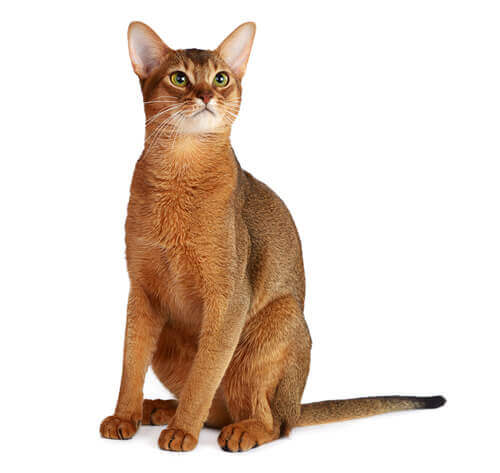
Abyssinian

Regal and highly intelligent, the Abyssinian is best described in one word: busy. Not a lap cat, this insatiably curious breed is always on the move, except when eating or sleeping. A fascinating, gorgeous breed, the Abyssinian is a natural athlete, with a muscular body and no fear of heights. The Aby is an affectionate, loyal, people-oriented companion that is well-suited for families with children older than 6.

DID YOU KNOW? The Abyssinian, one of the oldest cat breeds, was named for cats exhibited in shows in England in the late 1800s that were thought to have come from Abyssinia, the former Ethiopia.

The need-to-know

  • Highly active and inquisitive cat
  • Friendly but independent cat
  • Somehow talkative cat
  • Average build cat breed
  • Requires grooming once a week
  • Outdoor cat
  • Great family cat
Living Considerations
Not hypoallergenic
Size
Small to medium, with males weighing 3 to 4.5 kilograms and females weighing 2.5 to 3.5 kilograms
Coat
Medium
Temperament
Energetic, active
Grooming
Monthly
Shedding
Yes
Vocalisation
Quiet
Personality

The Abyssinian cat is quiet, intelligent and curious and is said to enjoy human company and become attached to its family. It enjoys space and activity, is a good climber, and will appreciate a garden full of trees and high places. Abyssinian cats are playful but tempered with some sense so are not too wreckless!

History and Origins

Country of Origin: Abyssinia (Ethiopia)

Other Names: : Abys, Bunny cat

The Abyssinian cat resembles the African wildcat, ancestor of the domestic cat. The history of the Abyssinian cat in the UK is a little obscure, but it is likely that it was brought back via army personnel from Abyssinia (now Ethiopia), in the 1860s. The early Abyssinian cats were crossed with British Shorthairs, and later with oriental breeds. Long-haired Abyssinian kittens have been found in litters for many years, and since the 1970s they have been developed as a separate breed called the Somali.

Nutrition and Feeding

Every cat is unique and each has their own particular likes, dislikes, and needs when it comes to food. However, cats are carnivores and every cat must obtain 41 different and specific nutrients from their food. The proportion of these nutrients will vary depending on age, lifestyle and overall health, so it's not surprising that a growing, energetic kitten needs a different balance of nutrients in her diet than a less active senior cat. Other considerations to bear in mind are feeding the right quantity of food to maintain 'ideal body condition' in accordance with feeding guidelines and catering to individual preference regarding wet or dry food recipes.

Other Information

Health and common issues

Abyssinian cats can suffer from an inherited disease called pyruvate kinase deficiency that can cause anaemia. A reliable test is available for this and prospective owners should ask breeders if their cats have been tested and are clear of the problem. An eye problem, called progressive retinal atrophy, which causes progressive blindness has been indentified in some countries so it is worth asking the breeder about this as well.

Best cat breeds for children

While this breed tends to be excellent with kids, each cat has a different personality based on training and life experience. Please consult the adoption organisation, if you are adopting, for details on a specific cats character.

Zoomed product photo

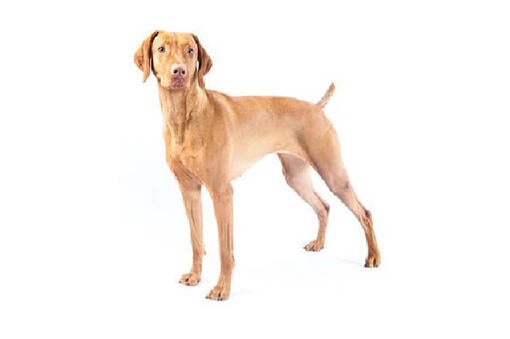
Vizsla (Hungarian Pointer)

A versatile hunter from Hungary, the Vizsla is an active, energetic dog with great power, drive and determination. Lively, affectionate and tractable, the Vizsla thrives with an active family. Gentle-mannered and sensitive yet fearless and protective, the breed excels as a watch and guard dog. The Vizsla trains easily. His coat is low maintenance.

DID YOU KNOW? The Vizsla was all but extinct by the end of World War I.

ALSO KNOWN AS: Hungarian Vizsla, Hungarian Pointer, Magyar Vizsla

The need-to-know

  • Dog suitable for non-experienced owners
  • Basic training required
  • Enjoys active walks
  • Enjoys walking an hour a day
  • Medium dog
  • Minimum drool
  • Requires grooming once a week
  • Non hypoallergenic breed
  • Quiet dog
  • Guard dog. Barks and alerts
  • May require training to live with other pets
  • Great family dog
Living Considerations
Good with children, not hypoallergenic, not suitable for apartment living
Size
Medium
Height
Males – 56 to 61 centimetres at the shoulders, Females – 53 to 58.5 centimetres at the withers
Weight
Males – 20 to 29 kilograms Females – 18 to 25 kilograms
Coat
Short
Energy
High
Colour
Golden rust in varying shades with lighter shadings over the sides of the neck and shoulders
Activities
Agility, Obedience, Field Trials, Rally Obedience
Indoor/Outdoor
Both
Zoomed product photo

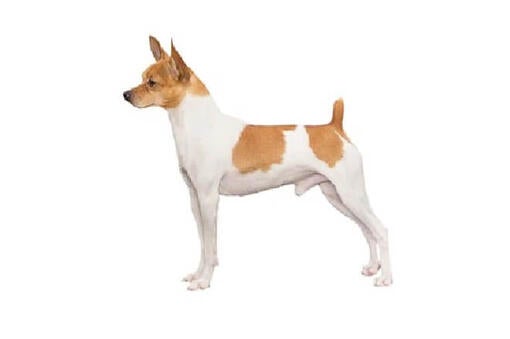
Toy Fox Terrier (American Toy Terrier)

The Toy Fox Terrier has a feisty, animated personality packaged in a small, elegant, nimble body. The breed is sociable and friendly, making him a wonderful family companion. A worthy watchdog, he also is fearless, loyal and alert. The Toy Fox Terrier is easy to care for, requiring minimal exercise. Weekly brushing and occasional baths are required for his fine, satiny coat.

DID YOU KNOW? The Toy Fox Terrier originated in the 1930s to create a milder, calmer version of the Fox Terrier. This American breed was developed from crossing the Fox Terrier and various toy breeds, such as the Miniature Pinscher, Italian Greyhound and Chihuahua. The breed is commonly called the “Amertoy.”

ALSO KNOWN AS: American Toy Terrier, Amertoy

The need-to-know

  • Dog suitable for non-experienced owners
  • Basic training required
  • Enjoys gentle walks
  • Enjoys walking half an hour a day
  • Little toy dog
  • Minimum drool
  • Requires grooming every other day
  • Non hypoallergenic breed
  • Very vocal dog
  • Not a guard dog
  • Great with other pets
  • Great family dog
Living Considerations
Good with older children, not hypoallergenic, suitable for apartment living
Size
Toy
Height
21.5 to 29 centimetres
Weight
3.5 to 7 kilograms
Coat
Short
Energy
High
Colour
White and black, white and tan, white black and tan, or white chocolate and tan
Activities
Conformation, Obedience, Agility
Indoor/Outdoor
Indoor
Zoomed product photo

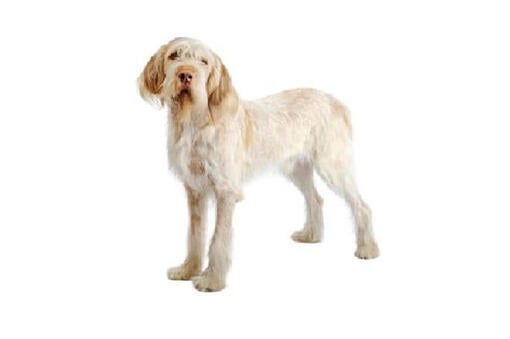
Spinone Italiano

A versatile hunting breed, the Spinone Italiano is a robust, powerful, muscular dog known for his superior nose, soft mouth and thick, wavy coat, which protects him from extreme temperatures. In the field, he is determined and tireless, but at home, this naturally cautious dog is sweet and calm. The affectionate Spinone Italiano is happiest when near his human companions. He requires daily exercise.

DID YOU KNOW? This ancient breed originated in northern Italy as early as 500 B.C. Throughout history, the Spinone Italiano has also been called the Italian Pointer, Spinone, Italian Spinone, Italian Coarsehaired Pointer, and Italian Griffon. “Bella” and “Tris” were the first-known Spinone Italianos in the U.S. They were imported in 1931 by Dr. Nicola Gigante.

ALSO KNOWN AS: Spinone, Italian Spinone, Italian Griffon, Italian Wire-haired Pointer, Italian Coarsehaired Pointer

The need-to-know

  • Dog suitable for non-experienced owners
  • Basic training required
  • Enjoys gentle walks
  • Enjoys walking half an hour a day
  • Large dog
  • Some drool
  • Requires grooming once a week
  • Non hypoallergenic breed
  • Chatty and vocal dog
  • Not a guard dog
  • Great with other pets
  • Great family dog
Living Considerations
Good with children, not hypoallergenic, suitable for apartment living if adequately exercised
Size
Large
Height
Males – 58.5 to 69 centimetres at the withers, Females – 56 to 63.5 centimetres at the withers
Weight
Males – 32 to 36.5 kilograms, Females – 28 to 32 kilograms
Coat
Wiry
Energy
Medium
Colour
Brown-roan, orange-roan, white, or white and orange with brown or orange markings
Activities
Conformation, Obedience, Agility, Therapy, Hunting Tests, Tracking, Field Trials
Indoor/Outdoor
Both
Zoomed product photo

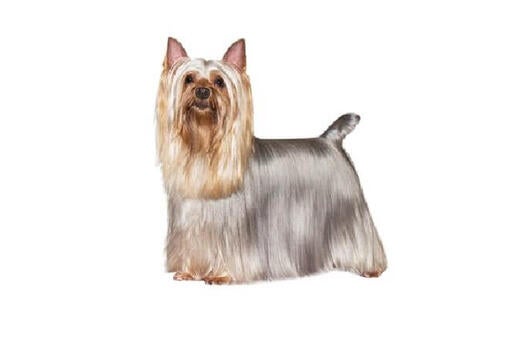
Silky Terrier

The friendly, lively Silky Terrier has a true terrier temperament with a zest for life. Originally bred to hunt vermin, this dog is quick and alert with a long, moderately low set body. He is playful, inquisitive and eager to please, making him an exceptional companion. The Silky Terrier requires little exercise but enjoys an occasional game of fetch or an outdoor walk. His fine, smooth coat must be brushed and bathed regularly.

DID YOU KNOW? In the 1800s, Yorkshire Terriers from England were imported to Australia and bred to Australian Terriers to improve the Australian Terrier’s coat colour. The end result was a type of dog known today as the Silky Terrier

ALSO KNOWN AS: Australian Silky Terrier, Silky

The need-to-know

  • Dog suitable for non-experienced owners
  • Basic training required
  • Enjoys gentle walks
  • Enjoys walking half an hour a day
  • Little toy dog
  • Minimum drool
  • Requires grooming daily
  • Non hypoallergenic breed
  • Chatty and vocal dog
  • Not a guard dog
  • May require training to live with other pets
  • Great family dog
Living Considerations
Good with older children, not hypoallergenic, suitable for apartment living if adequately exercised
Size
Toy
Height
23 to 25 centimetres
Weight
4 to 5 kilograms
Coat
Puffy double coat
Energy
Medium-long
Colour
Black and tan, blue and tan, blue-silver and tan, grey and tan, silver and tan, or silver-black and tan
Activities
Conformation, Agility, Earthdog Trials
Indoor/Outdoor
Both
Zoomed product photo

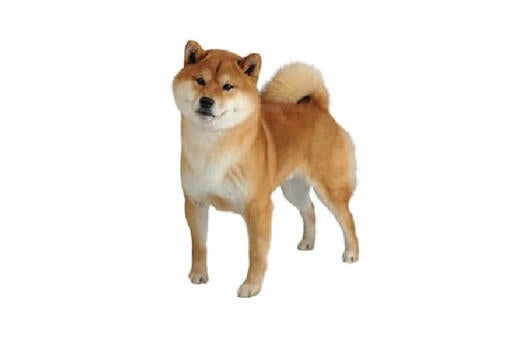
Shiba Inu

The bold, spirited Shiba Inu is a Japanese breed originally developed to hunt birds and small game on mountainous terrain. His small, dense body is marked by prick ears and a curled tail on a stunning soft, thick double coat, which should be brushed regularly. Independent, loyal and affectionate, he excels as a watchdog and companion. Moderate exercise from leash walks or in a fenced yard is a must for this active, agile breed.

DID YOU KNOW? In Japanese, the word “shiba” means “brushwood,” describing the breed’s hunting grounds, while “inu” means “dog.” The Shiba Inu is commonly referred to as the “Little Brushwood Dog.”

ALSO KNOWN AS: AJapanese Shiba Inu, Japanese Small Size Dog, Shiba Ken

The need-to-know

  • Dog suitable for non-experienced owners
  • Basic training required
  • Enjoys gentle walks
  • Enjoys walking half an hour a day
  • Small dog
  • Minimum drool
  • Requires grooming once a week
  • Non hypoallergenic breed
  • Chatty and vocal dog
  • Not a guard dog
  • May require training to live with other pets
  • Great family dog
Living Considerations
Good with children, not hypoallergenic, suitable for apartment living if adequately exercised
Size
Small
Height
Males – 37 to 42 centimetres, Females – 34 to 39 centimetres
Weight
8 to 10 kilograms
Energy
Medium
Colour
Black and tan, cream, red, or red sesame with white markings
Activities
Conformation, Agility, Hunting, Tracking
Indoor/Outdoor
Both
Zoomed product photo

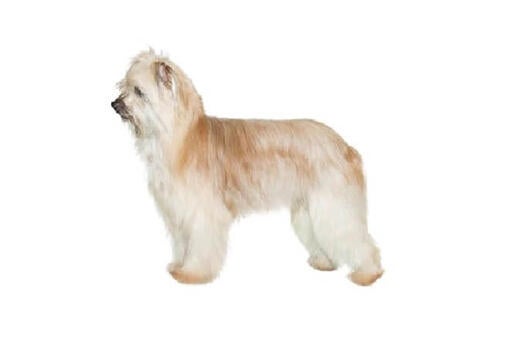
Pyrenean Shepherd

Originally bred to herd sheep in the French Pyrenees Mountains, the Pyrenean Shepherd is a powerful dog with a small, lean body and unique triangular head. The breed has two varieties: Rough-Faced and Smooth-Faced. An ideal companion, the Pyrenean Shepherd is alert, sensitive and intelligent. This energetic, cheerful dog thrives on having a job to do and is a perfect fit for active families.

DID YOU KNOW? An athletic breed with great stamina, the Pyrenean Shepherd is fondly called “Pyr Shep.” This breed can cover up to 25 miles a day working alongside a shepherd or farmer. Two of these vigorous dogs are capable of herding a flock of 1,000 sheep. Pyrenean Shepherd were used as couriers, guards and search-and-rescue dogs during World War I.

ALSO KNOWN AS: Berger des Pyrénées, Petit Berger, Pyrenees Sheepdog

The need-to-know

  • Dog suitable for non-experienced owners
  • Basic training required
  • Enjoys gentle walks
  • Enjoys walking half an hour a day
  • Small dog
  • Some drool
  • Requires grooming every other day
  • Non hypoallergenic breed
  • Chatty and vocal dog
  • Not a guard dog
  • Great with other pets
  • May require training to live with kids
Living Considerations
Good with children if properly trained, not hypoallergenic, not suitable for apartment living if adequately exercised
Size
Small
Height
Rough-Faced – 38 to 47 centimetres at the withers, Smooth-Faced – 39 to 53 centimetres at the withers
Weight
Males – 7 to 16 kilograms, Females – 7 to 14.5 kilograms
Coat
Rough-Faced – Long or demi-long; Smooth-Faced – Short
Energy
High
Colour
Black, black and white, blue merle, brindle, brindle merle, fawn, fawn merle, grey, slate grey, or white
Activities
Conformation, Herding, Search and Rescue, Agility, Obedience, Tracking, Flyball, Hearing Assistant
Indoor/Outdoor
Both
Zoomed product photo

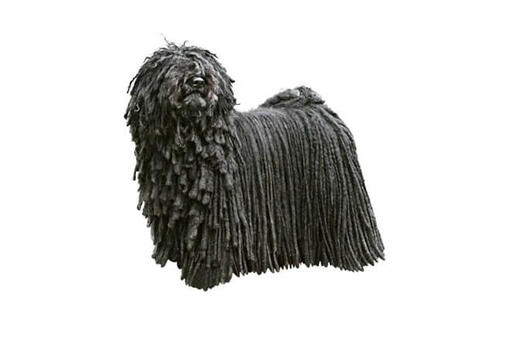
Puli

An ancient Hungarian herding dog, the spirited Puli is distinguished by his unique, wooly, corded coat that covers his compact body and requires extensive grooming. The breed is affectionate, alert and protective, making him an ideal family companion and watchdog. Clever and intelligent, the Puli retains his playfulness throughout his life. This active breed needs moderate daily exercise.

DID YOU KNOW? The Puli is born with an uncorded coat. His cords begin to develop at 9 months of age and continue to grow until the Puli is 5 years old.

ALSO KNOWN AS: Hungarian Puli

The need-to-know

  • Dog suitable for non-experienced owners
  • Basic training required
  • Enjoys gentle walks
  • Enjoys walking half an hour a day
  • Medium dog
  • Some drool
  • Requires grooming daily
  • Non hypoallergenic breed
  • Chatty and vocal dog
  • Guard dog. Barks and alerts
  • May require training to live with other pets
  • Great family dog
Living Considerations
Good with children if properly trained, not hypoallergenic, suitable for apartment living if adequately exercised
Size
Medium
Height
Males – 43 centimetres at the withers, Females – 41 centimetres at the withers
Weight
11 to 18 kilograms
Energy
Medium
Colour
Black, silver, white, brown, cream, or rust
Activities
Conformation, Herding, Obedience, Agility, Tracking, Therapy
Indoor/Outdoor
Both
Zoomed product photo

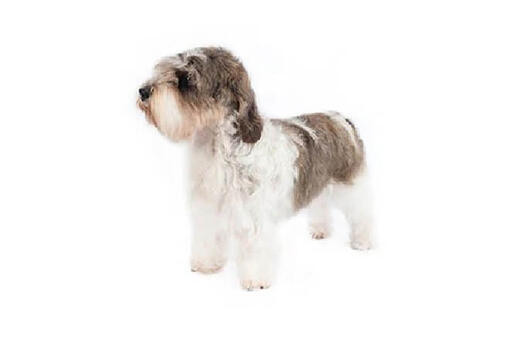
Petit Basset Griffon Vendeen

The Petit Basset Griffon Vendéen is a French scent hound developed in the 16th century to hunt small game over difficult terrain. This vivacious, outgoing breed is confident, happy and willing to please. The PBGV is best-suited for experienced dog owners with older children and fenced yards. A pack hound, he gets along well with other dogs and generally is happiest in their company. This breed does best with daily exercise.

DID YOU KNOW? The name of this breed in French reveals much about his characteristics: Petit means small; Basset means low to the ground; Griffon means rough or wire coated; and Vendéen is the area of France where the breed originated.

The need-to-know

  • Dog suitable for owners with some experience
  • Some training required
  • Enjoys gentle walks
  • Enjoys walking half an hour a day
  • Medium dog
  • Some drool
  • Requires grooming every other day
  • Non hypoallergenic breed
  • Chatty and vocal dog
  • Not a guard dog
  • Great with other pets
  • Great family dog
Living Considerations
Not hypoallergenic, suitable for apartment living, good with older children
Size
Medium
Height
33 to 38 centimetres
Weight
14 to 18 kilograms
Coat
Medium
Energy
Medium
Colour
White with any combination of lemon, orange, black, sable, tricolour, or grizzle markings
Activities
Agility, Field Trials, Hunting Tests, Obedience, Conformation, Tracking
Indoor/Outdoor
Both