Can Cats Eat Potatoes
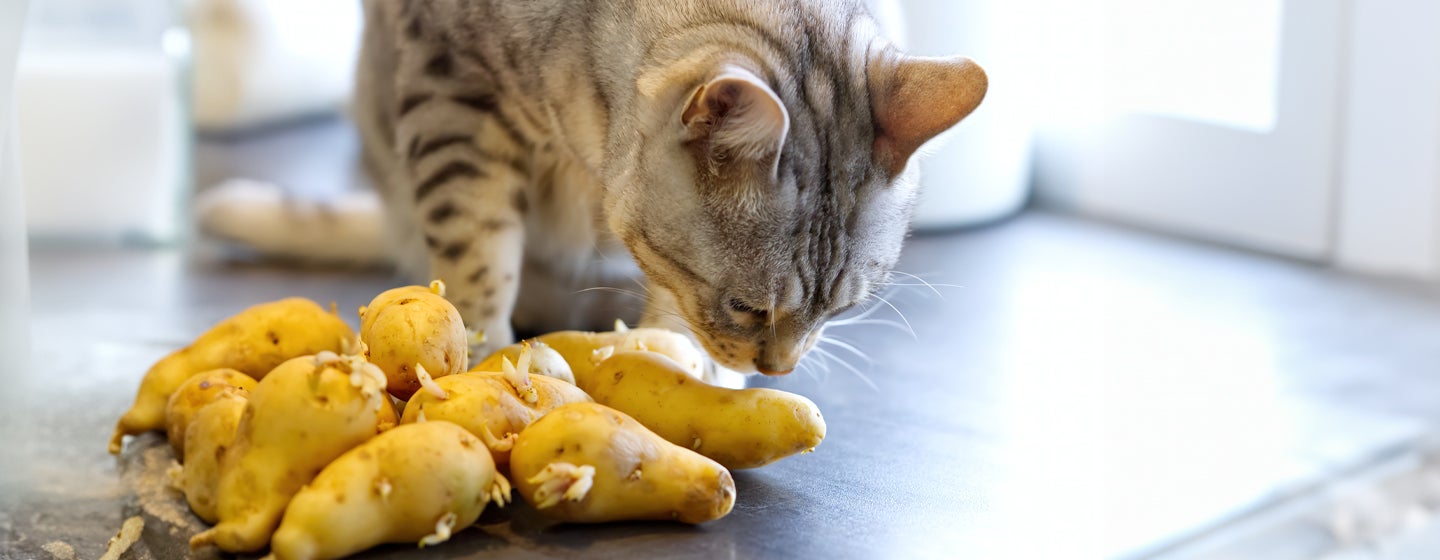
Potatoes are tasty, nutritious and a great staple ingredient in many of our favourite meals. No wonder our furry friends may be keen to investigate what’s so special about this starchy carbohydrate. Potatoes appear in many different forms on human plates, such as boiled, roasted, fried or mashed.
But can cats eat potatoes safely? Unfortunately, the answer to whether cats can eat potatoes isn’t entirely straightforward! Here’s what you need to know about cats and potatoes, so you can make sure you don’t offer your pet something that could be unsuitable for them.
Can Cats Eat Oatmeal?
For many of us, oatmeal is a food we consume daily at breakfast. Its popularity is partly due to the fact it’s easy to make, and it also has the benefit of being a great source of vitamins, minerals and fibre.
As oats and oatmeal are so good for us, many owners have started to wonder whether we can offer this food to our feline friends, and if they will experience the same health benefits as us humans.
Keep reading to find out if cats can eat oatmeal, or if they should stay away from this breakfast staple.
Can Cats Eat Mango
Mango is hard to resist. This exotic fruit often tempts us, with its lovely scent and sweet flavour. But what if it’s not just you eagerly waiting to dig into a bowl of mango cubes... Have you ever noticed your furry companion sitting next to you, hoping to do the same?
Some felines will be interested in anything they see their owner snacking on, and many cats are also curious about new things, so you may find your mango pieces will spark your cat’s interest. However, before sharing your fruit treat with your pet, find out whether or not cats can eat mango.
Can Cats Eat CucumberAOA_CENMKTG_PU_Website Article_Can_Cats_Eat_Cucumber_1440x560px.jpg4 mins read<p>Has cucumber ended up on your cat’s radar lately? This green vegetable is a staple in our homes, but it’s not one of the human foods you would expect a cat to be interested in.</p><br />
<p>Yet some of our feline friends may seem keen to get their paws on cucumber as soon as it touches the chopping board. If your pet is intrigued by this vegetable, keep reading to find out whether or not cats can eat cucumber safely.</p><br /></p>
Has cucumber ended up on your cat’s radar lately? This green vegetable is a staple in our homes, but it’s not one of the human foods you would expect a cat to be interested in.
Feeding & Nutrition
Why is My Cat Losing Weight?
Many cat owners are concerned about keeping their feline at a good weight. Most commonly concerns are centred around obesity, but your cat losing weight unintentionally could also be a sign that something’s wrong.
Your feline may be eating well and still losing weight, they may have a reduced appetite, or they may just be avoiding food entirely. Weight loss can be a sign of a number of different health problems so, if your cat is losing weight, it’s best to contact your vet as soon as possible.
In this guide we look at the most common reasons why your cat may be losing weight as well as the other symptoms you should be on the lookout for.
The Best 22 Cat-Friendly Plants
Keen to keep both your plant collection and your cat happy and thriving? It’s entirely possible.
We are well aware of how much our feline friends like to visit the plant pots for a snack, and how difficult it can be to stop them munching on everything they’re not supposed to, including poisonous plants. Toxic plants can be very dangerous if ingested by your cat and so, if your cat does manage to eat a plant you’re unsure about, be sure to get in touch with your vet straight away! But on a more positive note, there are lots of cat-safe plants out there that do not cause toxicity if your cat does manage to nibble on them. Here is a list of non-toxic plants for cats that are attractive to look at, but less risky for your feline friend.
Note: Although the plants listed are non-toxic – meaning they are unlikely to be dangerous if ingested by a cat – if your cat does manage to eat these plants it can still cause a stomach upset, which can result in diarrhoea and vomiting, as well as a very sore tummy! Because of this, we always advise to keep these plants out of reach of your cat to try and prevent them from having a sneaky nibble!
Cat Dandruff: Causes and Tips to Treat it
Cats seem to be some of the most resilient animals out there, from fearlessly climbing trees to always landing on their feet, so it’s no wonder we like to say they’ve got nine lives!
However despite this, as with all living beings, they can get a variety of ailments, and one of them is cat dandruff, the small, white flakes that fall off of dry skin. While dandruff is definitely unsightly, it can also cause real discomfort to your feline friend, especially if left untreated for extended periods of time.
Luckily, dandruff can be spotted early on, and with the right treatment, it can go away faster than you might think. To make sure you’re prepared, check out some of the potential causes and symptoms of cat dandruff, as well as a few tips on how to get rid of those annoying white flakes:
Rehoming Special Needs Cats
All cats deserve a loving family and a forever home. But there is a special group of felines that need a little bit of extra attention and care. In return, they’ll give their owners plenty of love for welcoming them into their life. These are the special needs cats, a lovely group of furballs that are often overlooked during the adoption process.
Some of them have been harmed or treated poorly, others have an illness or condition that requires life-long care and possibly ongoing medication. All of them need our affection more than we’ll ever know, but don’t require as much effort as you might think. Adopting a cat or kitten is extremely rewarding. With patience and guidance from the vet, there is no reason why they can’t have fun-filled lives, despite their special health condition. After all, they still have eight lives left to live!
So, if you want to know more about special needs cat adoption and what life might be like with one of these amazing fellows by your side, here are some of the common physical limitations in cats who may be struggling to find a new home.
Helping a Kitten with Diarrhoea
Kittens have very sensitive little stomachs and simple changes to their environment or diet can easily lead to diarrhoea.
While it’s normal for their waste to be softer than that of an adult cat, if it’s shapeless or has a liquid or mushy consistency, it’s highly likely that the kitten has diarrhoea. The condition is relatively common and luckily, it tends to be very treatable.
Why Are My Cat’s Eyes Watering?
Tears are produced constantly by cats to offer essential protection to their eyes. The fluid is responsible for removing debris, keeping eyeballs moist and providing essential nutrients. As tears are in permanent production, some crusting around the eyes is normal, but if your cat’s eyes are watering excessively or the discharge seems to be very thick and mucous-y, it can be a sign of something wrong.