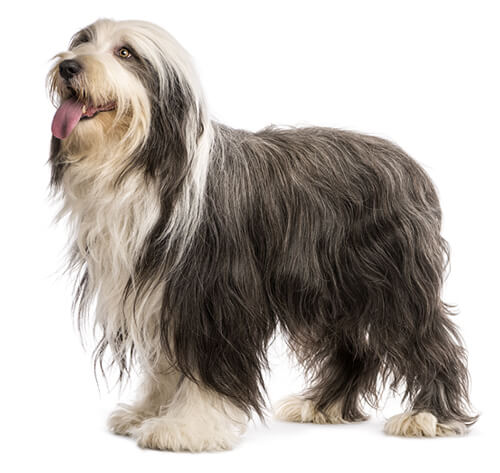
Machine Name
dog

Bolognese

A small but sturdy little dog, the Bolognese has a white coat that is described as ‘flocked’, never curly but distinctly ruffled looking and long. These amazing furballs are known to be affectionate but a bit stubborn at time. Bolognese are very loyal to their human families, but also tend to come with a personality twice their size.


The need-to-know


  • Dog suitable for non-experienced owners
  • Basic training required
  • Enjoys gentle walks
  • Enjoys walking half an hour a day
  • Little toy dog
  • Minimum drool
  • Requires grooming daily
  • Hypoallergenic breed
  • Chatty and vocal dog
  • Guard dog. Barks and alerts
  • Great with other pets
  • Great family dog
Personality

The Bolognese is a true companion dog, bonding closely with their owners and disliking being separated from loved ones. They are typically reserved with strangers and will bark to alert their owner to anything new, unusual or strange. Despite their small stature and cuddly nature, they are an intelligent dog, and a quick learner. Training should be provided to keep their active minds engaged.


History and Origins

Country of Origin:  Italy


Probably descended from the bichon (small, white, fluffy) breeds of southern Italy and Malta the Bolognese was developed in Bologna, Italy and has been known since as early as the 11th and 12th centuries. Popular with ruling families and nobility having been owned by aristocrats such as Madame Pomadour, Louis XIV of France, Philip II of Spain an Catherine the Great of Russia, these dogs were commonly gifted as companion dogs between regions and countries. There is even talk of Bolognese dogs being routinely fed from solid gold bowls and even having servants!Despite their enchanting personalities the Bolognese remains, as it always has been, a rare breed.


Nutrition and Feeding

Toy dogs such as the Bolognese, have a fast metabolism, meaning they burn energy at a high rate, although their small stomachs mean that they must eat little and often. Small-breed foods are specifically designed with appropriate levels of key nutrients and smaller kibble sizes to suit smaller mouths. This also encourages chewing and improves digestion. Discover more about how to offer your dog a balanced diet with our easy-to-follow guide.

Exercise

More than capable of an hour of dog exercise per day, the Bolognese is small enough to entertain in a decent sized garden should the need arise. As far as the Bolognese is concerned, time spent with their owner is time perfectly spent, and they are small enough to be easily carried should a walk prove a little too long and so are a ‘take anywhere’ dog.

Other Information

Health and common issues


The Bolognese dog is generally a healthy breed with no widely recognised breed specific health problems.


Space requirements


The Bolognese will happily live anywhere in any style of housing as long as there is access to a secure garden to play in and their owner is with them the majority of the time. This companion breed will not fare well left alone for long periods and should be taught to cope with short durations of separation from their owner as it does not come naturally.


Training bolognese


The Bolognese is easy to train using positive reinforcement, and should be trained as they are smart and clever. Small though they are, the Bolognese is still a dog and is a better companion for some basic training, and a happier dog if given some mental stimulation as well as regular physical exercise. Early puppy socialisation is a must to ensure these reserved little dogs are confident and happy in all situations. They can be slow to toilet train so patience is required.


Best family dog breeds


Reserved and easily mistaken for a toy by younger children, they are suitable for quieter homes, families with older children or retired couples or singles. While many dogs are traditionally thought of as being good with children, all dogs and children need to be taught to get on with each other and be safe together. Even so, dogs and young children should never be left alone together and adults should supervise all interactions between them.


Did you know?


Despite their rarity now the Bolognese was so popular they were owned by the likes of Catherine the Great, Madame De Pompadour and Empress Maria Theresa of Austria. They have also featured (alongside their owners) in works of art by Titian, Goya, Gosse and Watteau.


Bloodhound

With his keen scent ability, the Bloodhound is used worldwide as a tracking dog in criminal searches and rescue efforts. This breed descended from the St. Huberts Hound of eighth century Belgium. Kind, docile and affectionate, the Bloodhound is a good family pet. The breed has a distinctive look due to abundant loose skin that hangs around the head and neck forming deep folds. The coat should be groomed weekly.

DID YOU KNOW? The Bloodhound’s name refers to the pure-blood breeding of this hound. Bloodhounds are such accurate trackers that they have produced evidence that has been accepted in a court of law.

ALSO KNOWN AS: Chien de Saint-Hubert, St. Hubert Hound


The need-to-know


  • Dog suitable for owners with some experience
  • Extra training required
  • Enjoys active walks
  • Enjoys walking one to two hours a day
  • Large dog
  • Minimum drool
  • Requires grooming once a week
  • Non hypoallergenic breed
  • Chatty and vocal dog
  • Not a guard dog
  • May require training to live with other pets
  • May require training to live with kids
Living Considerations
Good with children, not hypoallergenic, suitable for apartment living if sufficiently exercised
Size
Large
Height
Males – 63.5 to 69 centimetres, Females – 58 to 63.5 centimetres
Weight
Males – 40 to 50 kilograms, Females – 36 to 45 kilograms
Coat
Short
Energy
Low to medium
Colour
Black and tan, liver and tan, red
Activities
Hunting, Tracking, Police Work, Search and Rescue, Conformation
Indoor/Outdoor
Both
Personality

These are gentle-natured, affectionate dogs who usually get on well with children and can live in harmony with other dogs and household pets. They are friendly dogs who will welcome both wanted and unwanted visitors. Although quiet in the house, they can be very vocal outdoors. They are family dogs and do not like to be left alone.


History and Origins

Country of Origin: Belgium


The ancestry of modern Bloodhound dog breeds can be traced back to the monastery of St. Huberts where dogs called St. Hubert’s Hounds were originally used to track wolves, big cats or deer, or to follow the trail of wounded game. The pale white versions of the breeds went on to be known as the Talbot Hound whereas the black and tans were called Bloodhounds.The Bloodhound was brought to Britain by William the Conqueror and it was used for stag-hunting - following a wounded animal sometimes for amazingly long distances.


Nutrition and Feeding

Large breed dogs, as well as having large appetites, benefit from a different balance of nutrients including minerals and vitamins compared to smaller-breed dogs. The Bloodhound is prone to bloating and stomach problems; smaller, more frequent meals can help minimise this risk.

Exercise

As adults, the Bloodhound has phenomenal stamina and needs two-plus hours daily - but this needs to be sniffing exercise and not just mindless walking. Primarily tracking dogs, once on the trail of an enticing smell, they will be desperate to find its source! Because of their size and growth rate, they must not be over-exercised as puppies. Care must be taken in the first year to ensure their bones and joints are given a proper chance to grow.

Other Information

Health and common issues


As with many breeds, Bloodhound breeds can suffer from hip dysplasia (a condition that can lead to mobility problems). Hip scoring of dogs prior to breeding is therefore important. The droopy skin on the head of Bloodhounds can result in problems with the eyelids and eyes. The breed club monitor the health of the breed carefully and should be contacted for the most up-to-date information and details of any DNA or additional testing they recommend. Breed Clubs can be found on the Kennel Club website.


Space requirements


This is a big dog who needs a lot of countryside to sniff in! They will appreciate a big garden too - and you can use this for scent games at home.


Training bloodhounds


The Bloodhound has little to no interest in any form of training that doesn’t involve using their nose! While they should be trained to walk (run!) on a harness and lead, finding a class where you can learn scentwork and sniffing games can give your Bloodhound an outlet for using their extraordinary nose and will keep them healthy and happy.


Best family dog breeds


The Bloodhound makes a great dog for families as they are gentle and patient. They may be too big and slightly clumsy for smaller children however. While many dogs are traditionally thought of as being good with children, all dogs and children need to be taught to get on with and respect each other, and be safe together. Even so, dogs and young children should never be left alone together and adults should supervise all interactions between them.


Did you know?


  • When James Earl Ray, the murderer of Martin Luther King, escaped from prison in 1977, he was only recaptured thanks to a pack of Bloodhounds who tracked him down several days later in the mountains of Tennessee.
  • One of the most successful Bloodhounds who was responsible for tracking escaped criminals in Kentucky recaptured over 600 fugitives. In one notable case, the trail ran for 138 miles and was 104 hours old.
  • Such is the regard for their scenting abilities, in many states of the US, a Bloodhound’s evidence in court cannot be challenged.


Bichon Frise

A white powder-puff dog known for his merry temperament, the Bichon Frise originated in the Mediterranean region in the 13th century. Gentle-mannered, sensitive and affectionate, the Bichon is an excellent family companion. This playful breed loves activity and requires regular exercise. Though the Bichon’s fluffy coat does not shed, it requires grooming to prevent mats.

DID YOU KNOW? The Bichon Frise is depicted in a number of works by the noted Spanish painter Francisco de Goya.

ALSO KNOWN AS: Bichon à poil frisé, Bichon Tenerife


The need-to-know


  • Dog suitable for non-experienced owners
  • Basic training required
  • Enjoys gentle walks
  • Enjoys walking half an hour a day
  • Little toy dog
  • Minimum drool
  • Requires grooming daily
  • Hypoallergenic breed
  • Quiet dog
  • Guard dog. Barks and alerts
  • Great with other pets
  • Great family dog


Living Considerations
Good with children, hypoallergenic, suitable for apartment living
Size
Small
Height
24 to 30 centimetres at the shoulders
Weight
4.5 to 8 kilograms
Coat
Medium
Energy
Medium
Colour
White and may have shadings of buff, cream or apricot around the ears or on the body
Activities
Conformation, Agility, Obedience, Rally Obedience
Indoor/Outdoor
Both
Personality

These lively, happy little dogs adore family life. They love to accompany the family on all outings but can be taught to be left alone occasionally. They socialise well and are fine in the company of other dogs and pets in the household.


History and Origins

Centuries ago, the Bichon Frise dog breed was popular in France and Spain, and the Bichon has been depicted in portraits of the royal families of both countries. Bichon-type dogs were developed on different islands in the Mediterranean, and Tenerife is where the Bichon Frise is thought to have originated. The Bichon of Malta (known as the Maltese today) is a close relative. 14th-century sailors are thought to have taken them over to Europe from Tenerife.

Nutrition and Feeding

Small dogs have a fast metabolism, meaning they burn energy at a high rate, although their small stomachs mean that they must eat little and often. Small-breed foods are specifically designed with appropriate levels of key nutrients and smaller kibble sizes to suit smaller mouths. This also encourages chewing and improves digestion.

Exercise

Bichon Frise dogs will adapt readily to the amount of exercise available from the family circumstances, but half an hour should be considered the minimum daily requirement - along with a chance to exercise their brains!

Other Information

Health and common issues


Bichon Frise dogs are generally very healthy little dogs. However, in common with many other breeds, they can suffer from some hereditary eye problems and kneecaps that may temporarily slip out of place (luxating patellas). They are also prone to developing watery eyes, and predisposed to a type of bladder stone.


Best family dog breeds


While many dogs are traditionally thought of as being good with children , all dogs and children need to be taught to get on with and respect each other, and be safe together. Even so, dogs and young children should never be left alone together and adults should supervise all interactions between them.


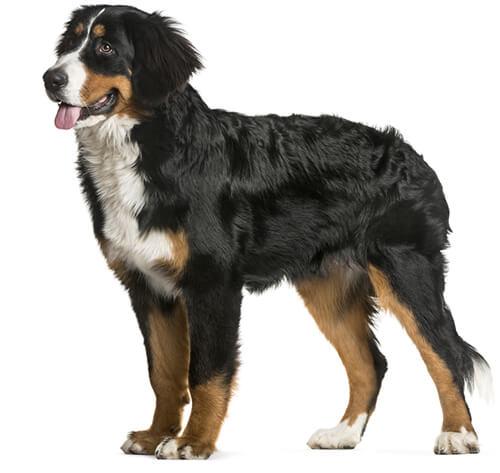
Bernese Mountain Dog

The sturdy, strong Bernese Mountain Dog originated on Swiss farms, where he worked as a drover, draft dog and guardian. The breed’s long, thick double coat protects him in cold conditions but requires frequent brushing. With his calm, confident temperament and desire to be near his family, the Bernese Mountain Dog is an ideal companion. Affectionately known as Berners, this breed requires moderate exercise.

DID YOU KNOW? One of four varieties of Swiss mountain dogs, the Bernese Mountain Dog is the second largest and the only one with a long, silky coat. By the end of the 19th century, the Bernese Mountain Dog was almost lost, but professor Albert Heim led a search for stock to preserve the breed. It was not until 1926 that Berners arrived in the U.S.

ALSO KNOWN AS: Berners, Berner Sennenhund, Bernese Cattle Dog


The need-to-know


  • Dog suitable for owners with some experience
  • Some training required
  • Enjoys gentle walks
  • Enjoys walking an hour a day
  • Giant dog
  • Heavy drool
  • Requires grooming daily
  • Non hypoallergenic breed
  • Quiet dog
  • Guard dog. Barks and alerts
  • Great with other pets
  • Great family dog


Living Considerations
Good with children, not hypoallergenic, not suitable for apartment living
Size
Large
Height
Males – 63.5 to 70 centimetres at the withers, Females – 58 to 66 centimetres at the withers
Weight
Males 40 to 54 kilograms, Females 36 to 47 kilograms
Coat
Long
Energy
Low
Colour
Tricoloured, with black, russet and white
Activities
Herding, Search and Rescue, Carting, Conformation
Indoor/Outdoor
Both
Personality

Bernese Mountain dogs are good-natured pets who love to be included in all aspects of family life, making wonderful companions. They are affectionate, patient and especially good with children, protecting them if necessary. They are social and need to be with people and given affection. They will generally bark to advise the arrival of visitors but will soon settle down again. Provided they have been introduced to cats and other household animals when young, they will live with them happily.


The Bernese Mountain Dog will suit a home-loving owner who has space for this gentle giant, likes grooming and enjoys an affectionate but not particularly active companion and doesn’t mind some canine drool.


History and Origins

The Bernese Mountain dog (or 'Berner') breed can be traced back 2,000 years to when the Romans invaded Switzerland (then known as Helvetia) with their cattle drovers and guard dogs. These Roman mastiff-type dogs were likely crossed with flock-guarding dogs who could withstand the severe weather in the Alps and also served to soften their temperaments. Bernese Mountain Dogs were often used as cart-pullers to transport woven goods or dairy products from village to village.

Nutrition and Feeding

Giant-breed dogs, as well as having giant appetites, benefit from a different balance of minerals and vitamins, supporting different joint and cartilage needs. The Bernese is also prone to bloating and stomach problems; try feeding smaller, more frequent meals to help minimise the risk.

Exercise

As puppies, exercise should be restricted to allow the bones and joints to form properly. After they are a year old, they can be allowed off the lead for free-running exercise. As adults, the Bernese Mountain Dog needs about an hour's daily exercise.

Other Information

Health and common issues


The health issue of most concern to the Bernese Mountain dog breed are the certain types of particularly aggressive cancers that they are prone to, and as such they often have a short life-span. As with many large breeds, they can also suffer hip dysplasia (a condition that can lead to mobility problems), therefore hip scoring of dogs prior to breeding is important.


Space requirements


A large country estate will do nicely! These are giant dogs who take up a lot of room and whose tails are on coffee-table height. While they don’t need a lot of exercise, they do enjoy being able to wander around outdoors so a good-sized garden will be appreciated.


Training


The Bernese Mountain Dog is a fairly easy-going dog who while a giant, doesn’t need too much training to ensure they are easy to live with. Any large breed however needs some basic training in order to be a safe and reliable member of canine society, so they should be taught all the basics including walking on a lead and a reliable recall.


Best family dog breeds


The Bernese Mountain Dog makes an ideal family dog as they love everyone. They may just be too big for smaller children and as they aren’t very portable, they’re not good for families who are always out and about as they doesn’t like being left alone. While many dogs are traditionally thought of as being good with children, all dogs and children need to be taught to get on with and respect each other, and be safe together. Even so, dogs and young children should never be left alone together and adults should supervise all interactions between them.


Did you know?


  • One of their previous jobs was as a farmer’s hand as many of the local farmers couldn’t afford horses, so they would use their strong dogs to pull carts of produce to market.
  • Their name refers to where they were bred: ‘Bern Canton’ – a region in central Switzerland.
  • Bernese Mountain Dogs are extremely strong and can pull up to 10 times their own weight.
  • They possess goofball personalities and can be a bit slower to mature than other dogs, so they retain their puppylike attitudes well into adulthood.
  • Interestingly, many owners of the Bernese Mountain Dog claim that they can understand laughter and when they do something that makes their owner laugh, they’ll likely repeat it!


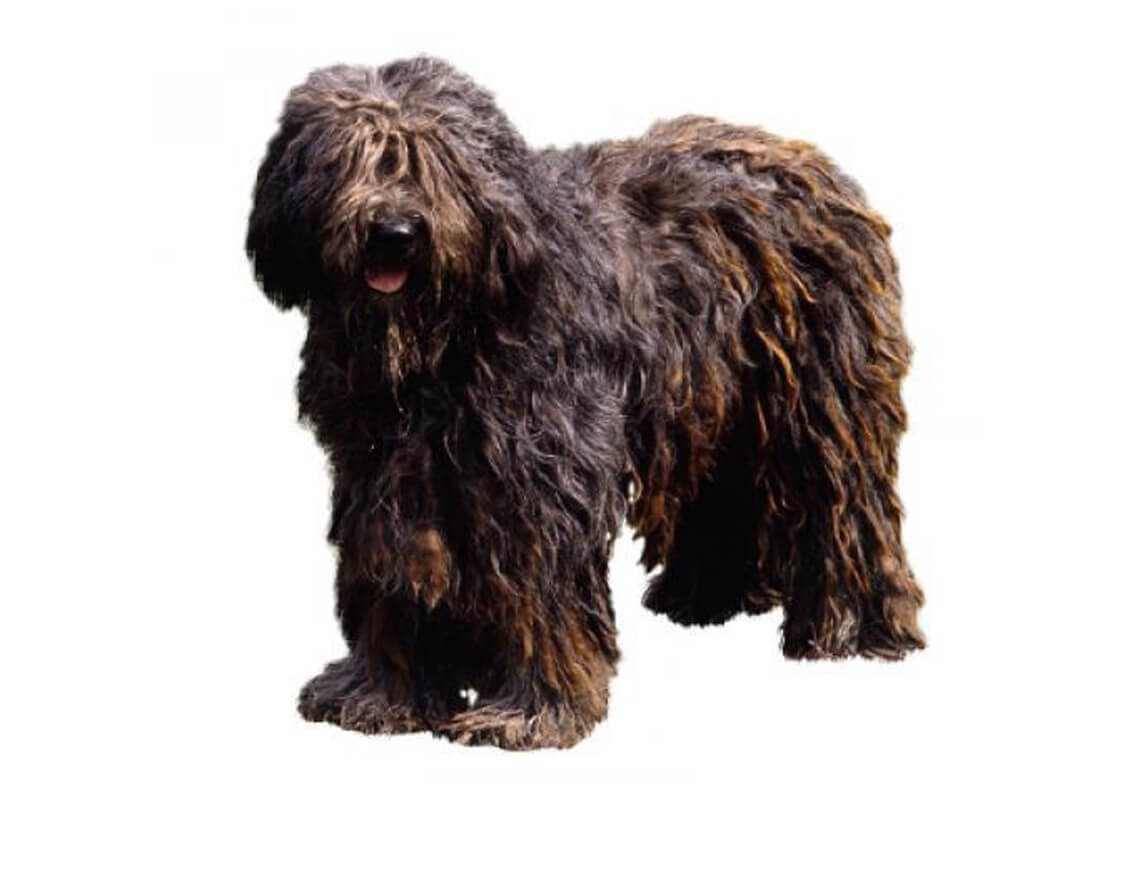
Bergamasco

The Bergamasco breed's coat is the most striking feature of this dog. It is greasy, long, abundant and hangs down in loose mats. Coat colours include grey, black, Isabella (pale/dappled fawn) or light fawn. Large and powerful, dogs stand at 58-62cm when fully grown and females at 54-58cm. Adult dogs weigh 32-38kg and females 26-32kg.


The need-to-know


  • Dog suitable for experienced owners
  • Extra training required
  • Enjoys vigorous walks
  • Enjoys walking more than two hours a day
  • Large dog
  • Minimum drool
  • Requires grooming every other day
  • Hypoallergenic breed
  • Very vocal dog
  • Guard dog. Barks and alerts
  • May require training to live with other pets
  • May require training to live with kids


Personality

The Bergamasco dog breed's guarding roots are still in evidence today: he is naturally cautious and vigilant and has a strong protective instinct. Early socialisation is therefore crucial, together with experienced handling. Not an ideal breed for the first-time owner, he requires ongoing training and has a strong desire to please.


History and Origins

An ancient herding and guarding breed, the Bergamasco dog breed is thought to have originated in Persia thousands of years ago where he accompanied nomadic farmers, moving the flocks in often harsh conditions and guarding them against predators. Some nomads settled in the Italian Alps and the dogs took the name of the region where they were found: Bergamasco. The breed almost died out with a decline in post-war wool production in Italy, but was revived by dedicated breeders.


Nutrition and Feeding

Large breed dogs, as well as having large appetites, benefit from a different balance of nutrients including minerals and vitamins compared to smaller-breed dogs. Some large breeds, such as the Bergamasco, are also prone to bloating and stomach problems; smaller, more frequent meals can help minimise this risk.

Exercise

Around an hour's exercise is needed daily, although this energetic breed has plenty of stamina and will happily accept more if you can offer it. Remove any debris from the coat when you return home!

Other Information

Health and common issues


The Bergamasco appears to be a very healthy breed, with no widely recognised breed specific problems.


Best family dog breeds


While many dogs are traditionally thought of as being good with children, all dogs and children need to be taught to get on with and respect each other, and be safe together. Even so, dogs and young children should never be left alone together and adults should supervise all interactions between them.


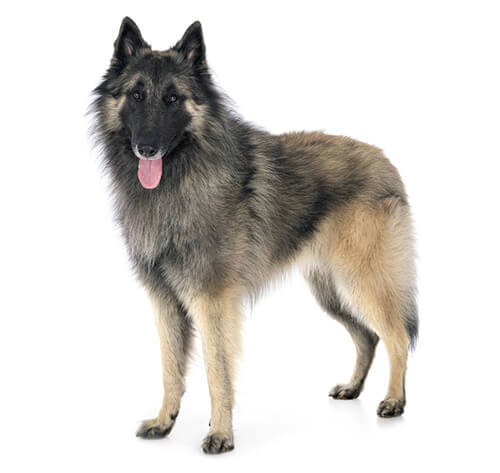
Belgian Shepherd Dog Tervueren

Bred as a general purpose herding and guard dog, the Belgian Tervuren has a strong protective instinct. One of four types of Belgian sheepherding dogs, this breed is distinguished by his medium-long fawn-and-black coat, which should be brushed twice weekly. Intelligent and devoted, the Belgian Tervuren is a loving dog that excels as a therapy dog and companion to the disabled.

DID YOU KNOW? The Belgian Tervuren is named for the Belgian village of Tervuren, home to M.F Corbeel, an early breeder who is credited with breeding the foundation stock. A famous fawn Tervuren, Milsart, became the breed’s first Belgian show champion in 1907.

ALSO KNOWN AS: Chien de Berger Belge


The need-to-know


  • Dog suitable for experienced owners
  • Extra training required
  • Enjoys vigorous walks
  • Enjoys walking more than two hours a day
  • Large dog
  • Minimum drool
  • Requires grooming once a week
  • Non hypoallergenic breed
  • Chatty and vocal dog
  • Guard dog. Barks and alerts
  • May require training to live with other pets
  • May require training to live with kids


Living Considerations
Good with children, not hypoallergenic, suitable for apartment living
Size
Large
Height
Males – 60 to 66 centimetres at the withers Females – 55 to 60 centimetres at the withers
Weight
Males – 27 to 34 kilograms, Females - 18 to 25 kilograms
Coat
Medium to Long
Energy
High
Colour
Fawn to russet mahogany with black overlay
Activities
Therapy, Agility, Conformation, Herding, Obedience, Rally, Search and Rescue, Tracking
Indoor/Outdoor
Both
Personality

The Tervueren is an affectionate, devoted companion who will protect his home and family. As with all breeds with a guarding tendency, it is not advisable to encourage the guarding instincts when young, as they could start trying to guard you in inappropriate situations. Their natural guarding instincts will kick in if and when necessary. However, he has a great sense of humour and learns very quickly.


History and Origins

The Belgian Shepherd Dog comes in four varieties: the Laekenois, Tervueren, Groenendael and Malinois, named after the areas in Belgium from which they came. The Tervueren is closer to the Groenendael than the other two. It is believed that two 'black-tipped fawn long-haired' sheepdogs were crossed and one of the resulting litter was crossed to the foundation stock of the Groenendael. This litter became the precedent of the Tervueren. In the 1940s the Tervueren dog breed nearly disappeared altogether; however, in the 1950s interest was rekindled in the breed.


Nutrition and Feeding

Large breed dogs, as well as having large appetites, benefit from a different balance of nutrients including minerals and vitamins compared to smaller-breed dogs.

Exercise

The Tervueren needs two hours-plus of daily exercise and mental stimulation. Highly trainable, he can excel at agility, obedience and other canine sports. They are very active dogs and should not be considered as pets if they are to be left alone all day.

Other Information

Health and common issues


As with many breeds, all varieties of the Belgian can suffer from hereditary eye disorders and hip dysplasia (a condition that can lead to mobility problems). Eye testing and hip scoring of dogs prior to breeding is therefore important. This particular type of Belgian Shepherd is also predisposed to epilepsy.


Best family dog breeds


While many dogs are traditionally thought of as being good with children , all dogs and children need to be taught to get on with and respect each other, and be safe together. Even so, dogs and young children should never be left alone together and adults should supervise all interactions between them.


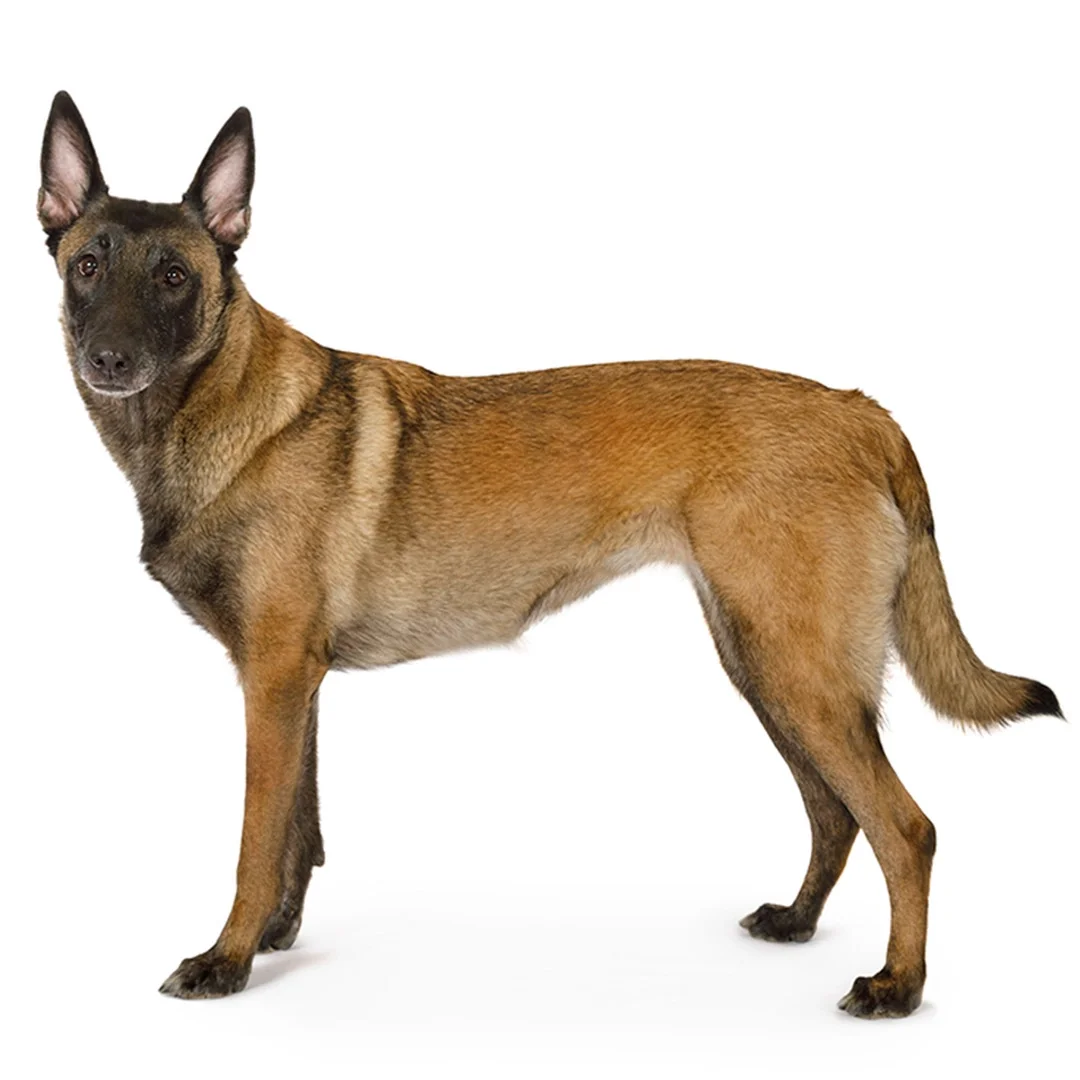
Belgian Shepherd Dog Malinois (Belgian Malinois)

The Malinois is a medium to large sized dog with an athletic, lean build and a short, tight coat. Sometimes mistaken for the larger, heavier boned German Shepherd Dog, the Malinois is more ‘sports car’ to the German Shepherd Dogs ‘utility vehicle’!


The need-to-know


  • Dog suitable for experienced owners
  • Extra training required
  • Enjoys vigorous walks
  • Enjoys walking more than two hours a day
  • Large dog
  • Some drool
  • Requires grooming every other day
  • Non hypoallergenic breed
  • Chatty and vocal dog
  • Guard dog. Barks and alerts
  • May require training to live with other pets
  • May require training to live with kids


Personality

To say that the Malinois is not for the faint-hearted is something of an understatement, they are not nicknamed the ‘Maligator’ for nothing. This is an affectionate, devoted but intense breed that requires an experienced owner, dedicated to training not just as a hobby, but as a lifestyle.


A well trained Malinois is capable of excelling in any sport, but they are predisposed to guard and to bite, and it would be unwise to expect anything less.


Intelligent, sharp, alert, loyal and clever, the Malinois is not a dog to under-estimate, nor to leave to entertain themselves!


History and Origins

Country of Origin:  Belgium


The Malinois is one of four varieties of Belgian Shepherd dog, (the others being the Laekenois, Tervueren and Groenendael), named for the areas of Belgium they originate from.Whilst hard working sheepdog types have been recognised in Belgium since the Middle Ages, it was in the 1890s that a professor of the Belgian School of Veterinary Sciences recorded breed standards for the four types. He noted that the main differences were in coat type, and divided the breed into the four types and advised breeding them as separate breeds.


Nutrition and Feeding

Large breed dogs, as well as having large appetites, benefit from a different balance of nutrients including minerals and vitamins compared to smaller-breed dogs.

Exercise

Needing two hours or more of daily exercise, plus training and mental stimulation in the form of some sort of work or sport, this is not typically a relaxing pet dog for most people. They are highly trainable and can do extremely well at a variety of canine sports, but will need to be taught to relax, that won’t come naturally to most!

Other Information

Health and common issues


As with many breeds, all varieties of the Belgian can suffer from hereditary eye disorders, and hip dysplasia (a condition that can lead to mobility problems). Eye testing and hip scoring of dogs prior to breeding is therefore important. The breed club monitor the health of the breed carefully and should be contacted for the most up-to-date information and details of any DNA or additional testing they recommend. Breed Clubs can be found on the Kennel Club website.


Space requirements


The Mali does not require a huge home, but a large secure outdoor area to train and play in is a must. They will do better in a quieter location without the constant over-stimulation of passing traffic or pedestrians, and with access to a variety of interesting walks. Better in the leafy suburbs or countryside, this dog is likely to find towns and cities overstimulating and stressful.


Training belgian shepherd dog malinois


This is the original training junkie, the Belgian Malinois thrives on work and problem solving, using their bodies and their minds. While this clever dog can be trained to complete almost any task, they really get a buzz from chasing and biting, and safe, appropriate outlets for this behaviour must be provided, with training a reliable release from bite toys being a priority. Trained best using positive reinforcement (they are surprisingly sensitive), through play and the opportunity to chase, bite and tug, the Malinois is a rewarding dog to work with, but very much a lifestyle dog, not a hobby dog.


Best family dog breeds


Whilst there will always be exceptions to every rule, the Belgian Malinois is unlikely to be a good pet around small children. The amount of work and time they require from their owner, plus the speed at which they learn and react means this is a dog much better suited to someone who works with dogs, and has an active, outdoors lifestyle. While many dogs are traditionally thought of as being good with children, all dogs and children need to be taught to get on with and respect each other, and be safe together. Even so, dogs and young children should never be left alone together and adults should supervise all interactions between them.


Did you know?


  • Belgian Malinois have become very popular recently due to the many films featuring or starring members of the breed.
  • Long before that though, Malinois were true working heroes, serving in the First World War as messengers and assistants to the Red Cross, pulling ambulance carts and carts carrying firearms.
  • Today, Malinois are still very popular as military dogs, and a Belgian Malinois called Cairo was part of the Navy SEAL team who captured Osama bin Laden in 2011.
  • Belgian Malinois are used to guard the grounds of the White House.
  • The Belgian Malinois is the favoured breed of Navy Seals due to their bravery which is essential as they’re trained to leap out of airplanes and skydive with their handlers!
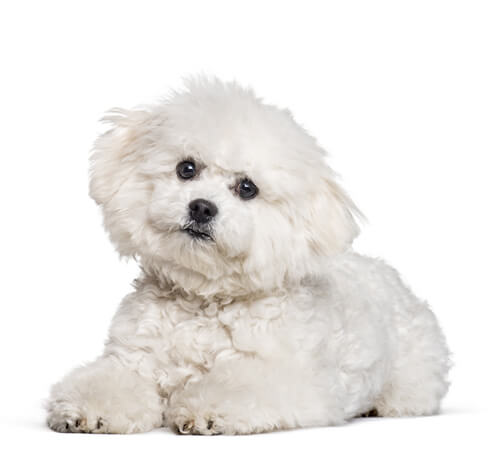
 

Belgian Shepherd Dog Laekenois

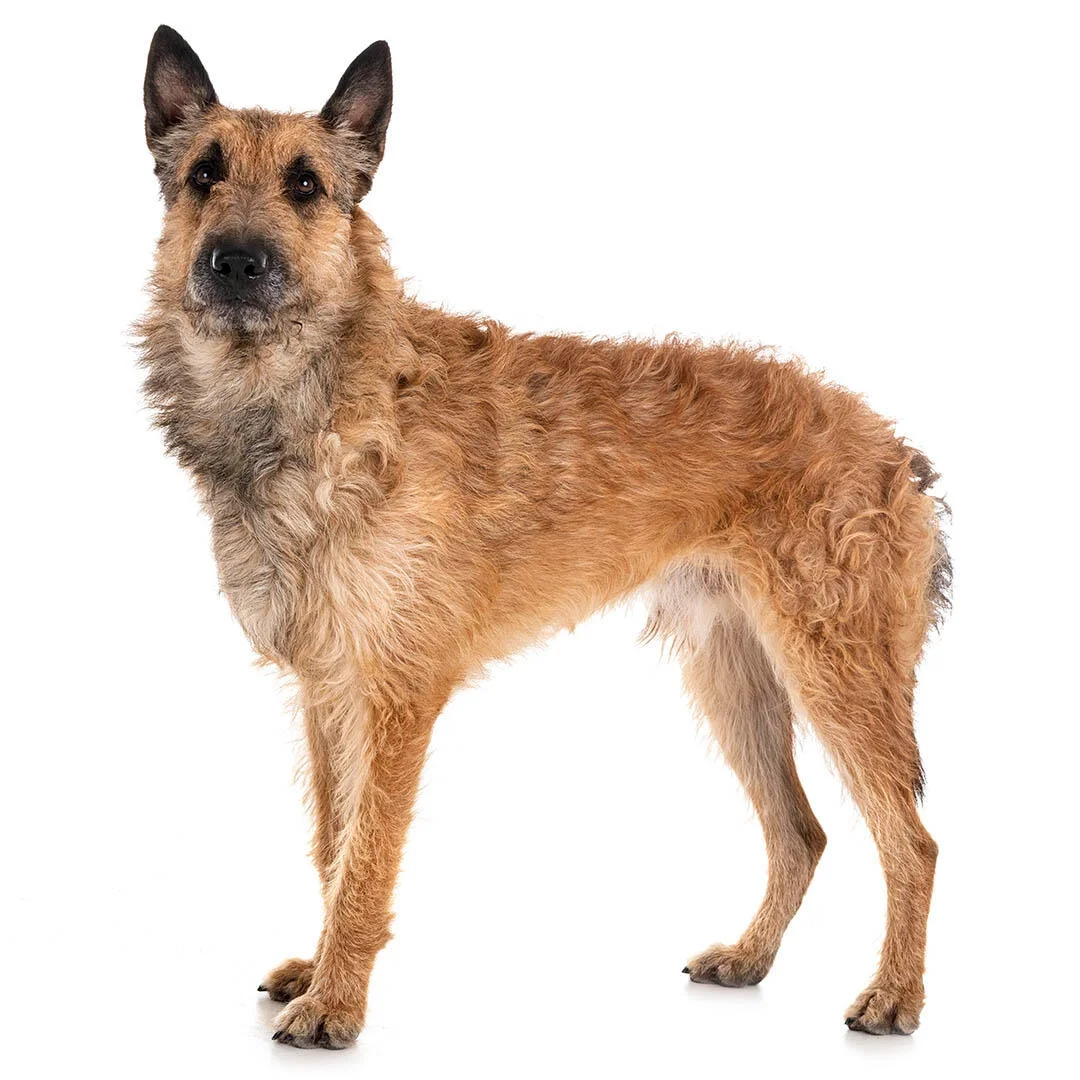
The Laekenois dog breed is a medium-sized/large, rough-haired dog that appears square in outline. The weatherproof coat comes in reddish with black shading mainly on the muzzle and tail. Adult dogs should measure between 61-66cm and females between 56-61cm. They weigh between 27.5-28.5kg.


The need-to-know


  • Dog suitable for experienced owners
  • Extra training required
  • Enjoys vigorous walks
  • Enjoys walking more than two hours a day
  • Large dog
  • Some drool
  • Requires grooming every other day
  • Non hypoallergenic breed
  • Chatty and vocal dog
  • Guard dog. Barks and alerts
  • May require training to live with other pets
  • May require training to live with kids


Personality

As a pet, he is a devoted companion; he does not like to be separated from his family, preferring to join in with all activities. Affectionate with his loved ones, he is naturally protective of his home and family – an instinct that appears naturally and does not need to be encouraged. Early socialisation is vital with all dogs with guarding tendencies, including the Laekenois dog, especially as he can be quarrelsome with other dogs if lacking positive, early experiences.


History and Origins

The Belgian Shepherd Dog comes in four varieties: the Laekenois, Tervueren, Groenendael and Malinois, named after the areas in Belgium from which they came. The Laekenois dog is the rarest of the four varieties. They were originally used for herding and to guard the linen fields where valuable cloths were laid in the sun and rain. As their coats were harsh and wiry, they were ideal for outdoor work in all weathers. Today the Belgian army and the police use them.


Nutrition and Feeding

Large breed dogs, as well as having large appetites, benefit from a different balance of nutrients including minerals and vitamins compared to smaller-breed dogs.

Exercise

The Laekenois dog needs two hours-plus of daily exercise and mental stimulation. Highly trainable, he can excel at agility, obedience and other canine sports. They are very active dogs and should not be considered as pets if they are to be left alone all day.

Other Information

Health and common issues


As with many breeds, all varieties of the Belgian can suffer from hereditary eye disorders, and hip dysplasia (a condition that can lead to mobility problems). Eye testing and hip scoring of dogs prior to breeding is therefore important.


Best family dog breeds


While many dogs are traditionally thought of as being good with children , all dogs and children need to be taught to get on with and respect each other, and be safe together. Even so, dogs and young children should never be left alone together and adults should supervise all interactions between them.


Belgian Shepherd Dog Groenendael (Belgian Groenendael)

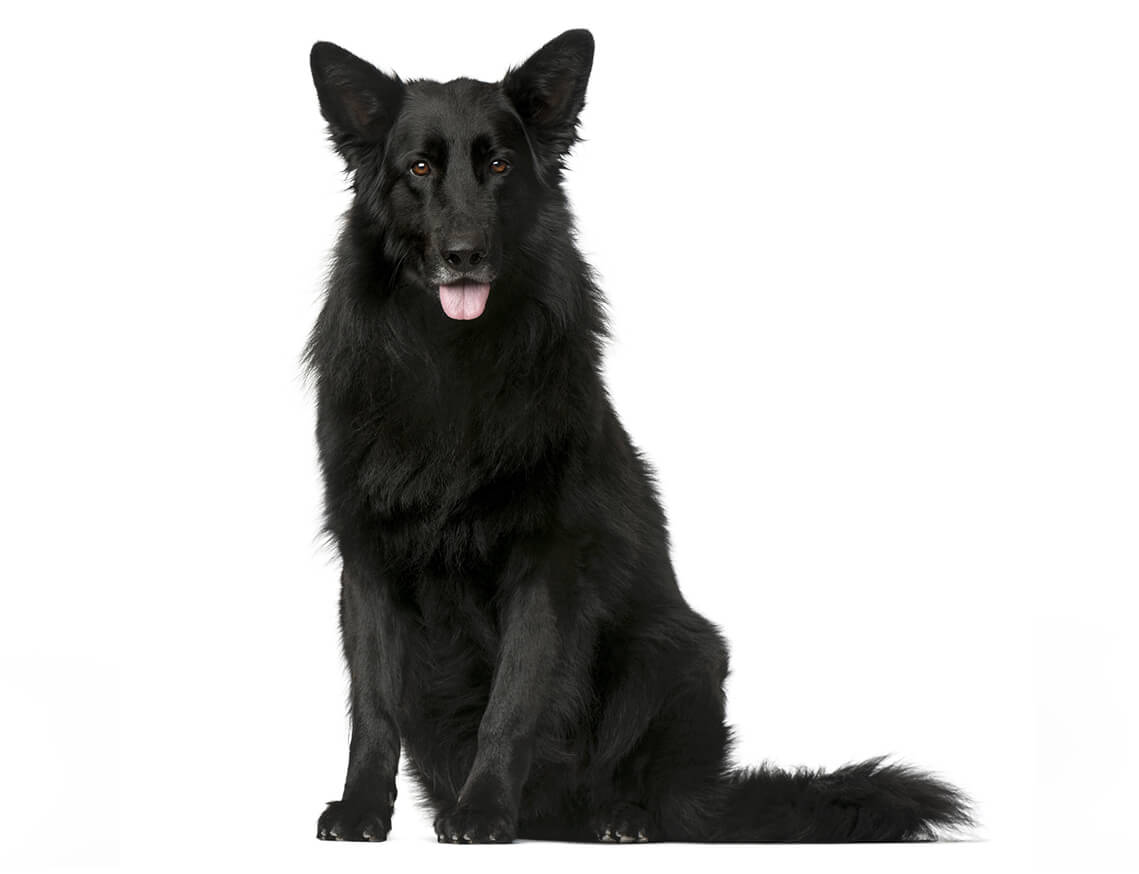
An elegant, muscular dog, the Belgian Sheepdog is a loving companion that excels as a herding and guard dog. Originating in the 1800s, the Belgian Sheepdog is an intelligent, easily trained, active breed that does best when given a job or purpose. One of four types of Belgian sheepherding dogs, he is distinguished by his long, black coat, which has a dense undercoat and requires weekly brushing.

DID YOU KNOW? During both World Wars, Belgian Sheepdogs proved themselves valuable by working as message carriers, ambulance dogs and pulling machine guns. The first Belgian Sheepdog kennel was established by Nicholas Rose of Groenendael, Belgium, and his black sheepdogs, Petite and Picard d’Uccle.

ALSO KNOWN AS: Belgian Sheepdog, Chien de Berger Belge


The need-to-know


  • Dog suitable for owners with some experience
  • Extra training required
  • Enjoys vigorous walks
  • Enjoys walking more than two hours a day
  • Large dog
  • Some drool
  • Requires grooming every other day
  • Non hypoallergenic breed
  • Chatty and vocal dog
  • Guard dog. Barks and alerts
  • May require training to live with other pets
  • May require training to live with kids


Living Considerations
Good with children when properly trained, not hypoallergenic, suitable for apartment living if sufficiently exercised
Size
Large
Height
Males – 60 to 66 centimetres at the withers, Females – 55 to 61 centimetres at the withers
Weight
Males – 24 to 30 kilograms
Coat
Long
Energy
High
Colour
Black
Activities
Conformation, Agility, Obedience, Rally, Tracking, Herding, Search and Rescue, Police Work, Therapy
Indoor/Outdoor
Both
Personality

The Groenendael is an affectionate, devoted companion that wants to join in with everything. Their natural dog guarding instincts will kick in if and when they sense it is necessary. They will protect their home and family, so it is not advisable to encourage his guarding instincts when young, as he could start guarding you in 'normal' situations. Early, thorough socialisation is imperative with this breed.


History and Origins

There are four varieties of Belgian Shepherd Dog – the Groenendael, Tervueren, Malinois and Laekenois – named after the areas in Belgium from which they came. Hardworking sheepdogs from Belgium have been recognised since the Middle Ages. In the 1890s a professor of the Belgian School of Veterinary Sciences recorded standards for the various types of Belgian sheepdogs. It was noted that they were all similar in type with the main difference being the coat. The professor then divided them into varieties and advised breeding them as separate breeds. The Groenendael dog breed was developed from a black bitch of the Belgian sheepdog type being crossed with another black herding dog. The resulting litter became the precedent of the Groenendael.

Nutrition and Feeding

Large breed dogs, as well as having large appetites, benefit from a different balance of nutrients including minerals and vitamins compared to smaller-breed dogs.

Exercise

The Groenendael needs two hours-plus of daily exercise and mental stimulation, and to this end they excel at agility and obedience. They are very active dogs and should not be considered as pets if they are to be left alone all day.

Other Information

Health and common issues


As with many breeds, all varieties of the Belgian can suffer from hereditary eye disorders, and hip dysplasia (a condition that can lead to mobility problems). Eye testing and hip scoring of dogs prior to breeding is therefore important.


Best family dog breeds


While many dogs are traditionally thought of as being good with children , all dogs and children need to be taught to get on with and respect each other, and be safe together. Even so, dogs and young children should never be left alone together and adults should supervise all interactions between them.


Bedlington Terrier

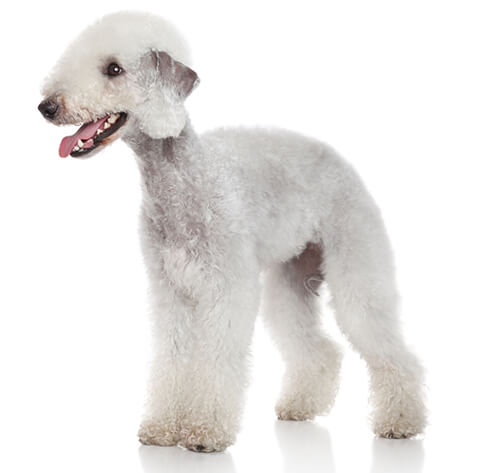
A hardy breed known for his curly, woolly coat, the Bedlington Terrier was developed in 19th-century England to catch vermin. His gracefully shaped body gives the Bedlington the capacity for great speed and endurance. Mild and gentle with a lovable nature, the breed makes a wonderful family companion. He is an energetic but not overly rambunctious companion that needs daily exercise. His coat requires regular trimming.

DID YOU KNOW? The Bedlington Terrier was popular with John D. Rockefeller and his family. The Bedlington, named “Timmie,” who won the 1948 Westminster Kennel Club Dog Show was owned by Rockefeller's grandnephew, William A. Rockefeller.

ALSO KNOWN AS: Rothbury Terrier, Rodberg, Rothbury's Lamb


The need-to-know


  • Dog suitable for owners with some experience
  • Extra training required
  • Enjoys active walks
  • Enjoys walking one to two hours a day
  • Large dog
  • Minimum drool
  • Requires grooming every other day
  • Hypoallergenic breed
  • Quiet dog
  • Guard dog. Barks and alerts
  • May require training to live with other pets
  • May require training to live with kids


Living Considerations
Good with children, not hypoallergenic, suitable for apartment living
Size
Small
Height
Males - at least 40 centimetres at the withers, Females - at least 38 centimetres at the withers
Weight
7.5 to 10.5 kilograms
Coat
Medium
Energy
Medium
Colour
Blue, sandy, liver, blue-and-tan, sandy-and-tan, or liver-and-tan
Activities
Agility, Obedience, Rally Obedience, Conformation
Indoor/Outdoor
Both
Personality

The Bedlington is affectionate and full of fun, being loyal and gentle to their owners. They are however very much a typical terrier, and can be rather reactive as well as acting as an effective watchdog, being quite courageous once roused. In general, they will be fairly placid if they are receiving a regular amount of mental and physical stimulation.


History and Origins

Country of Origin: England


Originally bred from a combination of local terriers, with an outcross to both Whippets and Dandie Dinmonts, workers in the Rothbury area of Northumberland developed the Bedlington Terrier in the 18th century. A little like a wolf in sheep’s clothing, the gentle appearance of the Bedlington Terrier was rather at odds with their tough working natures, and they developed a reputation as a killer of vermin, a poacher's sidekick and a fighter.They entered the show ring in 1870 and since then their appearance and their natures have changed to give us the dog we have today.


Nutrition and Feeding

Small dogs have a fast metabolism, meaning they burn energy at a high rate, although their small stomachs mean that they must eat little and often. Small-breed foods are specifically designed with appropriate levels of key nutrients and smaller kibble sizes to suit smaller mouths. This also encourages chewing and improves digestion.

Exercise

The Bedlington Terrier needs at least an hour's daily exercise ideally more. They excel in games that involve running, jumping and retrieval - including agility. They must be kept mentally stimulated to avoid behavioural problems developing that arise from boredom or frustration.

Other Information

Health and common issues


The Bedlington Terrier can suffer from an inherited liver disease ('copper storage disease'). A DNA test is available, and so all breeding dogs should be tested. As with many other breeds, they can also suffer hereditary eye disorders and so eye testing of breeding dogs is recommended. The breed club monitor the health of the breed carefully and should be contacted for the most up-to-date information and details of any DNA or additional testing they recommend. Breed Clubs can be found on the Kennel Club website.


Space requirements


The Bedlington Terrier does not need much space at all - but they do need access to open safe places to get all the daily exercise they need.


Training bedlington terriers


Bedlington Terriers are surprisingly trainable - especially in sports such as agility where they can excel - and this helps to keep their busy minds and bodies occupied. Early and ongoing socialisation is needed as they can be unfriendly with other dogs. A good recall is essential to prevent them from getting into trouble chasing squirrels or rabbits, and they do need a lot of time and patience to train them to live with cats. They may never be reliable with strange cats or small animals.


Best family dog breeds


Bedlington Terriers can make good family dogs but like many terriers they can get overly aroused by rough or noisy games so are better in families with older sensible children. While many dogs are traditionally thought of as being good with children, all dogs and children need to be taught to get on with and respect each other, and be safe together. Even so, dogs and young children should never be left alone together and adults should supervise all interactions between them.


Did you know?


  • Originally there were two different types of Bedlington Terrier - the ones that made use of the Whippet to give them longer legs designed for chasing rabbits and hare-coursing, and the ones that used the Dandie Dinmont Terrier to give them shorter legs for going to ground. Now the Bedlington is a mixture of both.
  • Bedlington Terriers used to be known as ‘Gypsy Dogs’ as they were used by Romanies for poaching.
  • They’re often referred to as ‘the smartest and quickest’ of the terrier breeds.
  • The first ever Bedlington Terrier was called Piper and was said to still be hunting at the grand age of 14, despite being nearly blind and toothless.