Sorry, you need to enable JavaScript to visit this website.
Skip to main content
Caring for Puppy, Adult and Senior Dogs Teeth
5 mins read
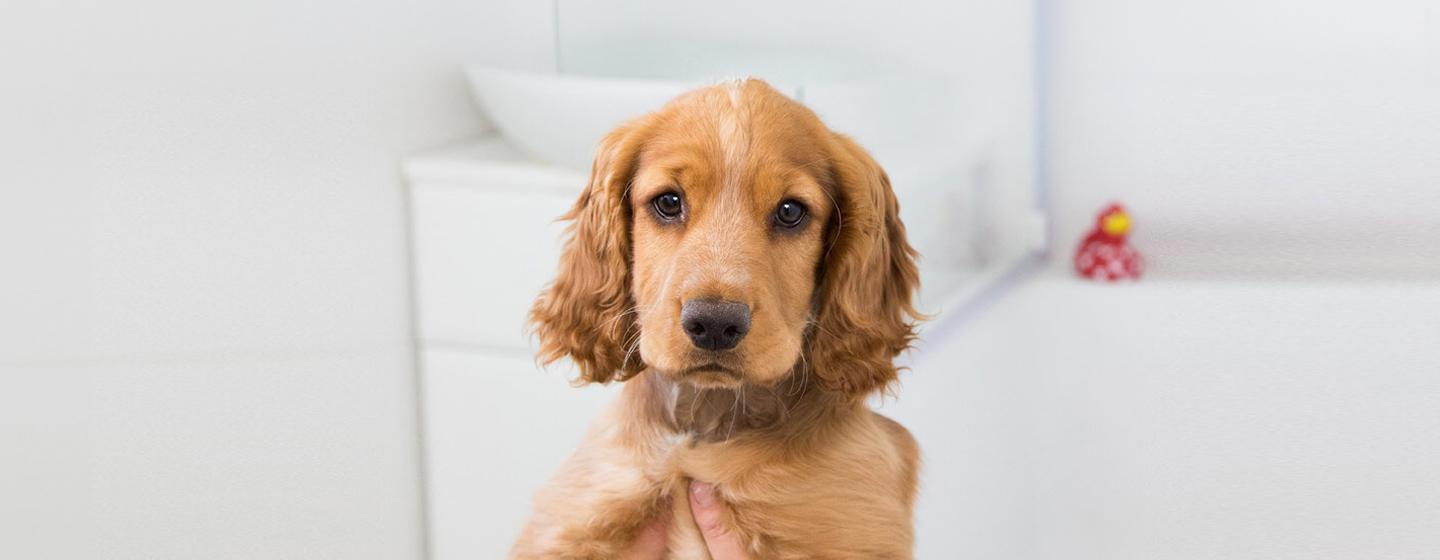
We all know that caring for a dog’s teeth is important. However, did you know that at different stages of their life, your dog requires different types of dental care? Puppies have sensitive and vulnerable teeth. For this reason, their teeth should be treated with care. Their young teeth may also not yet be strong enough to deal with some dental treatments. Equally, adult dogs’ teeth are not as fragile and therefore can withstand other forms of care. Dental care is particularly important here, because unlike puppies their set of teeth has to last for the rest of their life. Older dogs tend to be at a higher risk of dental conditions because their teeth are often more fragile, and they have worn down over time. Read on to discover the different stages of dental care. Puppy Teeth Taking care of a puppy’s teeth can be difficult. Their mouths and teeth are constantly growing and going through changes, which makes keeping track of their dental health important. By the age of 3-4 weeks your pup should have started to grow their first set of teeth. Just like people, dogs grow a set of milk teeth before their adult teeth come through. Once they have come through it tends to take around another 3-4 months before they fall out and adult teeth begin to take their place. Whilst milk teeth aren’t permanent it is still important to look after them. Following the below tips should help keep your puppy’s teeth healthy throughout their first year: Check teeth regularly – Since your puppy’s teeth are constantly changing it’s important that you check them out at least once a week. This will allow you to identify if there are any early signs of a condition developing in your dog’s mouth. Provide your puppy with toys – It’s important to make sure your dog has chew toys while they’re going through the teething process. Chew toys will not only help to keep your dog’s teeth clean, but will also soothe the pain of teething. Make sure teeth have fallen out – After about 3-4 months your puppy’s teeth should have started to fall out. You should take your pup to the vet if your dog’s teeth haven’t started to fall out by this time. Brush their teeth – Brushing your puppy’s teeth from a young age is really important. Not only does it help look after their teeth, but it also gets them used to the idea of brushing from a young age. We advise you start off by slowly rubbing your fingers across your puppy’s mouth. Once you have mastered this you can start to use toothpaste and eventually a toothbrush. Remember to praise and reward your dog after each session of cleaning.
Health
Caring For a Newborn Kitten
5 mins read
Caring for a newborn kitten can be daunting. The type of care you provide will depend on whether the mother is present or whether you have found this kitten on its own. In this article, we will talk you through the essentials of kitten care, what you should keep in mind as you raise this feline through the early years of their life and how to bring up a strong, healthy and confident cat. Is the mother present? The first question you need to consider when caring for a newborn kitten is whether the mother is present. If she is, then there is less that you will need to do. Most cats know instinctively how to raise their young and will do all the necessary actions at all the right stages in the kitten’s life. It is your job to simply make sure they are warm, safe and protected. But if you have found a newborn kitten that doesn’t seem to have a mother, you will need to take on all her duties. If this is a stray kitten, do make sure the mother is not coming back before taking the kitten in. If you are not careful, you could separate the mother from her young. Keeping them warm When considering how to care for a newborn kitten, you must remember to keep them warm. If the kitten you find is cold, you must warm their body temperature before you do anything else. You can check how cold they are by touching their paws or the tips of their ears.
Health
Can Dogs See Ghosts?
4 mins read
We all know dogs are able to sense plenty of things we can’t. So, are ghosts one of them? In this article we’re trying to answer the old-age question: “do dogs see ghosts?”. Our canine friends are loyal, gentle and all-around amazing beings. But it’s their ghostbuster-like behaviour that makes them unlike any other family member: howling at the moon, staring into empty space, getting vocal for no apparent reason or running out of the room as if chasing some invisible enemy.
Behaviour & Training
Basic Dog Training Commands
2 mins read
Teaching and training your dog basic commands and cues is a fun and rewarding experience for both of you. It’s important to begin training your dog at an early age to get the foundations right before your puppy grows into an adult dog. Puppy training and teaching your dog is a great way to spend time together and can also be lots of fun! Dogs are fast learners, and with your loving guidance, training your dog how to ‘come’, ‘sit’, ‘stay’ and even go to the toilet will nurture your relationship as well as encourage good behaviour. Well-trained dogs are less likely to stray, and generally have more comfortable and fulfilling lives compared to their untrained counterparts. Young puppies make eager pupils, so you can start training your dog as soon as you get them home. It’s a myth that pups need to be at least six months old before they can be properly trained – the younger they are, the easier it is to teach them. Think of them as little furry sponges, waiting to soak up all the learning you can give them! Here you’ll find lots of advice on the basics of dog training. For more detailed and advanced dog training advice, try contacting a professional trainer. Ask your vet for a recommended local pet behaviourist or dog trainer.
Behaviour & Training
Alopecia in Dogs
Alopecia in Dogs
4 mins read
It can be quite worrying if you notice that your dog seems to be losing some of their lovely coat. Alopecia in dogs can be the result of skin infections such as ringworm (a fungal infection), a bacterial infection or parasites such as mites, and is often the result of the dog scratching or licking an itchy or sore area. Alopecia in dogs can affect all breeds and genders at any stage of their life. It’s a fairly common condition and can display as either partial or complete hair loss, but it can also affect your dog’s skin, endocrine, lymphatic and immune systems. It can be alarming to see your dog losing hair as it can be very noticeable, especially if you have a long-furred pet who typically has a silky-smooth coat. Luckily, alopecia in dogs is usually very treatable and a visit to the vet should help to find the root of the problem and allow you to find a suitable treatment to get your dog back to their usual, gorgeous selves. Causes of hair loss in dogs Alopecia in dogs can be a result of a number of skin conditions and cases can range from gradual to acute. The most common causes of hair loss in dogs include: • Mange, an occurrence caused by the mite ‘Demodex’. • A disruption in the growth of hair follicles caused by trauma, infection, immune disease or endocrine system abnormalities. • Hair follicle inflammation. • Allergic reactions: this may be to food or items in your dog’s environment. • Diet and feeding: poor diet can often be a cause of hair loss in dogs. • Parasites and fleas: these can cause intense itching and you may notice your dog losing hair around their lower back, inner thighs, neck and ears. • Bacterial skin infections or hot spots. • Ringworm: if the cause is ringworm, it will typically display as circular patches of flaky, red, hairless patches. • Overgrooming: grooming is obviously normal, but sometimes dogs may do it excessively due to stress or pain. • Seasonal alopecia: some dogs may experience hair loss each autumn which may take around 6 – 12 months to regrow. This type is most common in Boxers, Bulldogs, Dobermans and Staffordshire Bull Terriers. • Inherited: alopecia in dogs can be inherited if your dog’s mother of father suffered from it. More widespread hair loss in your dog’s coat may indicate a more specific disease, so it’s always important to see your vet as soon as you suspect your dog may be losing their fur. Symptoms of alopecia in dogs If you notice your dog losing hair, that can be a symptom of alopecia in itself, but there are also a few other signs they may display too: • Brittle or dry coat. • Shedding more than usual. • Bald patches on your dog. • Crusting, inflammation or red patches around the area of hair loss. • Scaly skin may be present. • Dandruff. • Itchy skin. • Overgrooming. • Patches of dark skin.
Health
10 Tips to Keep Cats and Dogs Happy Indoors
6 mins read
Our pets are a saving grace when we’re stuck inside. Their happy wagging tails and sweet purrs offer a welcome pick me up when we’re feeling down, but after a while, they can get bored of being cooped up. We’ve created this guide with our top 10 tips to keep your dog or cat happy indoors. When it comes to being stuck inside, there’s no doubt that pets can make the time at home feel a whole lot more enjoyable. They’re there when we need to vent or just need a good cuddle, and their care provides a productive outlet that’s beneficial to both pets and people. But being stuck at home with your pet can also present its share of challenges. Here you can find some tips on how to keep your pet happy and engaged when you’re stuck inside. 1. Stick to Their Routine Your routine has likely been disrupted in some pretty significant ways. In times like these, it can be tempting to let your pet’s routines fall to the wayside, too. Purina behaviourist Dr. Annie Valuska warns against this: “It’s important to try to keep your pet’s routine as intact as possible. Feeding, potty, and walks should all happen when they normally do.” She also reminds us that continuing to ask for good manners, like sitting before going through a doorway or not begging for table scraps, is another important way to maintain consistency in your pet’s routine. 2. Be Intentional About Rest Time Your pet may be used to having time to themselves while the family is away, so try to give them plenty of rest time throughout the day. As Purina behaviorist Dr. Francois Martin reminds us, “It is not a good idea to change your pet’s routine with a lot of socialisation. Pets are not kids. Owners don’t have to keep them busy with things to do all day.” Parents, breathe a sigh of relief: your kids may need activities to fill their days, but your cat or dog will be just fine, and will even benefit from having some quiet time. 3. Let Them Chew It Out For those conference calls, homeschooling sessions, or just moments when you need some rest, it can be helpful to give your pet a long-chew treat to help keep them entertained. Dr. Sverine Ligout, a Purina behaviorist, reminds us that while these treats can be a fun activity for your pet, it can also be easy to overfeed them. Keep calorie counts in mind and compensate for extra treat calories by feeding a little less at mealtime. 4. Exercise, Exercise, Exercise Keep nerves in check and channel nervous energy into a productive outlet - exercise. Staying active during this time is as beneficial for you as it is for your pet. You may not be able to take your dog to the dog park for exercise, but you can still find ways to get their energy out. Even a trip to the mailbox can provide a little exercise. If you’re stuck inside, clear away some furniture to make room for a game of fetch or tug of war. Get out in the backyard if you have one and play a game of chase. We recommend using exercise as another way to reinforce your pet’s schedule. Have planned play sessions at around the same time each day, this will encourage your pet to follow routine, while also providing physical and mental stimulation, as well as promoting the human-animal bond. 5. Play Some Mind Games Another great way to tire your pet out is with mental stimulation, like teaching them a new trick or two! Have you always wanted your dog to be able to roll over or for your cat to dance? Now is the perfect time for those lessons. “Just like people, pets experience what we call the ‘Eureka Effect,’ or the emotional response to problem solving,” Dr. Ragen Mc Gowan, Purina behaviorist, explains. “That ‘ah ha’ moment when you finally figure something out. You feel a positive surge of emotions. Our pets experience this as well.” You can also use feeding time as a way to mentally enrich your pet’s day. Scatter their food around the house and let them use their sense of smell to find it or incorporate a puzzle toy into feeding to give them a little mental challenge.
Behaviour & Training
Creative Cat and Dog Enrichment Idea
9 Creative Cat and Dog Enrichment Ideas
5 mins read
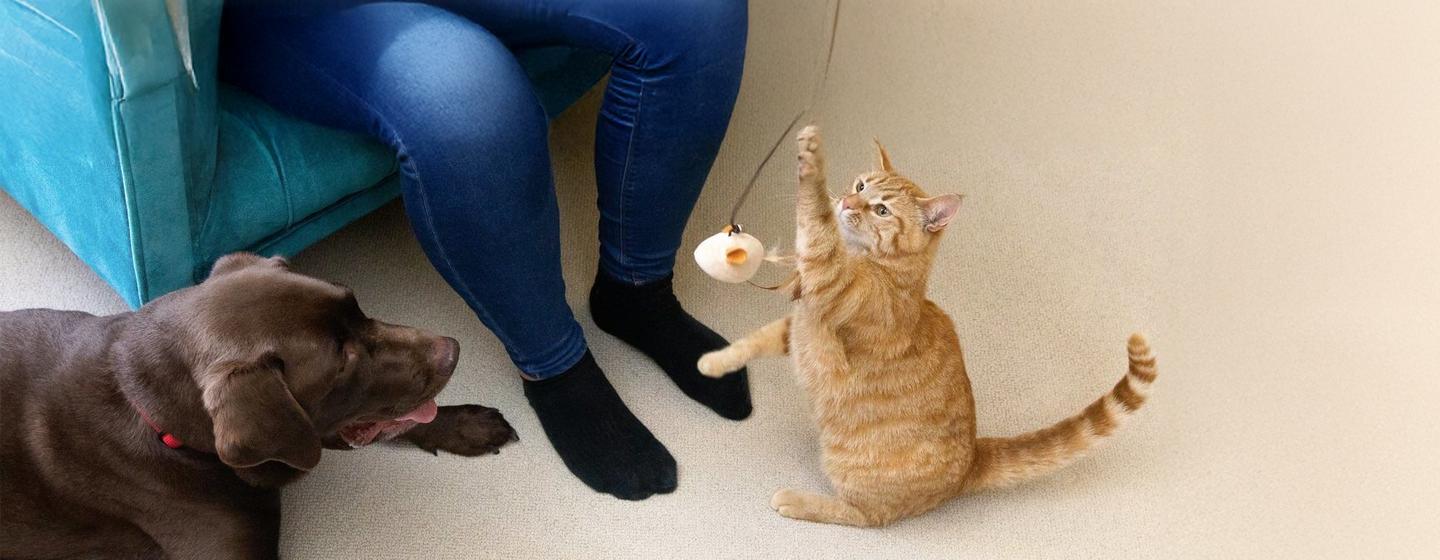
Spending lots of time indoors can get boring for all after a while, and that feeling extends to your pets too! That’s why we’ve put together this article to give you lots of handy tips for keeping your cat or dog entertained inside your home. When the whole family is cooped up inside for extended periods of time, you may find it difficult to come up with new activities for your family and pets. Fortunately, there are a number of enrichment activities you can set up indoors for both cats and dogs and some can even involve the kids. These activities can provide your pet with much-needed mental stimulation and help prevent boredom, which can lead to destructive behaviours if left unchecked. 1. Designated Together Time Transitioning to being home all day is a big change for everyone, including your pets. Try creating a new routine with designated time together each day. Try doing fifteen minutes at the same time every day for a week. Find a quiet space, and while giving your pet your undivided attention, pet them for the full fifteen minutes, adding in praise or telling them a story. Note how your pet reacts the first day compared to their reaction a week later. They may start seeking you out when it’s play time. If you both enjoyed this time together, continue as a daily activity, or change things up by keeping the same time but adding a new activity. 2. Movement Both dogs and cats find moving objects, lights and sounds entertaining. You can hang a bird feeder outside a window so your pet can watch. Light catchers, lasers, feather wands and cat dancer toys are popular with cats. You can even try creating your own as a family activity. Light catchers or wind catchers are easy for beginners. 3. Couch Potato Play Spending more time inside often means more time on the couch binge-watching a TV show. Your pet may enjoy curling up next to you for TV time, but you can also give them something to do without leaving the couch. We suggest keeping a basket or drawer of toys close by, such as stuffed animals, feather wands and tug-toys. Verbal encouragement is often enough for pets as they interact with a toy on their own. Provide words of praise, which can increase their excitement for the activity and extend play time.
Health
Cool Tricks to Teach Your Dog
5 Cool Tricks to Teach Your Dog
11 mins read
Now that your pup knows basic dog training, it’s time to teach them some cool dog tricks! Read our step-by-step article for advanced training top tips. We all love the idea of having a well-trained dog who hangs on our every word – and now your puppy has all the basics under their belt, it’s time to move on to the more advanced dog training techniques. Learning new tricks and games with your dog is going to benefit you as much as will benefit them and it will enhance your relationship as a result. It’s a win-win! Some of these fun dog tricks are based on mastering basic dog training skills, so if you need a refresher make sure you check our article first. How to focus your dog’s attention for learning dog tricks Having a dog who will give you their attention when you ask means they are ready to listen to you, and this is the first step in every other part of your advanced puppy training. The fun dog tricks below require your puppy’s attention for the learning process to begin. There’s no point asking your dog anything if his mind is elsewhere! Teach your pup to look at you when you say his name. This is something you should have been doing since puppyhood, but this is a good time to have a refresh. Have treats in your pocket while you’re in the house or garden. At various times when your dog isn’t expecting it, say their name brightly and enthusiastically. If they look at you, drop a treat on the ground between you, so the dog moves towards you to get the treat. You are teaching the puppy that their name means “give me your attention and good things happen”. Start doing this when there are no distractions and build it up until you can do it everywhere, no matter what is going on. Positive association like this is an important step in advanced dog training. Top tips for teaching your dog tricks • Be patient. It can take several repetitions over a few days before your dog gets the hang of these advanced tricks. Arm yourself with plenty of patience and treats before every session. • Keep the sessions short. Even when you’re the master of your pup’s attention, dogs will cease to be interested in what you have to say if the training goes on for ages. Limit the sessions to a few minutes each. It’s better to have multiple short dog tricks training sessions a day than a long one lasting the entire afternoon.
Behaviour & Training
Your Puppy’s First Day Home
13 mins read
Getting a new puppy is incredibly exciting for all the family, but it can be quite scary for your new pup. Find out how to deal with your puppy’s first day home with Purina. Your puppy’s first day home is an exciting one for all the family! You are starting out your new life together with the canine best friend you have always dreamt of. Everything is ready to welcome the new puppy and help them settle in straight away. But there is something many new owners don’t realise. While everyone in the house may be bursting with excitement and desperate to have a play with the newest member of the family, your puppy’s first day home may look completely different to them. After all, they’re on their own in a strange place with people they don’t know. It can be overwhelming for your pup, and may be stressful or frightening for them. Here’s how to help your puppy make an easy transition to family life. Take things slowly on your puppy’s first day home No matter how excited everyone is about the puppy’s arrival, keep their homecoming low-key. It’s so easy to shower the new dog with affection, particularly for the younger members of the family. While the new pup is getting used to their surroundings, always supervise excited children and give your dog some much-needed time out from all the excitement. Start off by having them in one room and let them explore in their own time discovering the scents, sights and sounds of this new world. Allow your puppy to settle in gradually and in their own time. This is far better than overwhelming them with enthusiastic games, cuddles and play while they are still trying to find their paws.
Puppy Care
Why is your cat drinking lots of water?
5 mins read
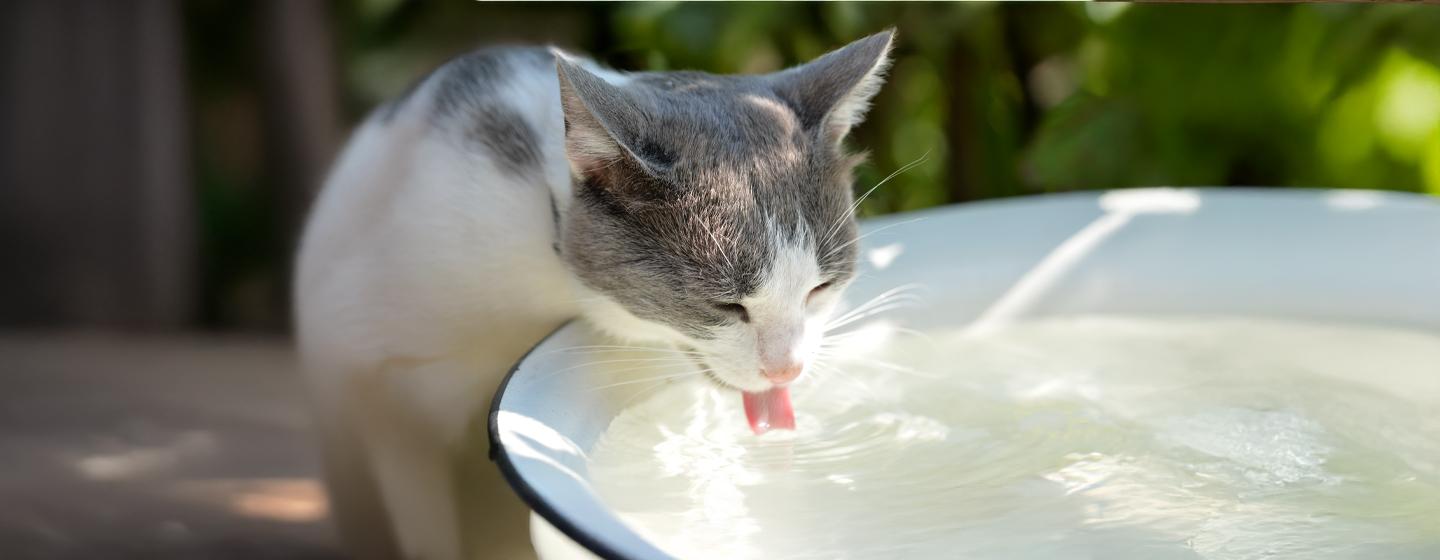
When the weather gets warmer, your cat will probably want to drink more water. However, on occasion, if your cat is drinking a lot it may signal an underlying problem. Read on to find out about your cat’s water intake, and how to spot any problems. How much should cats drink? Every cat is different, and each one will drink different amounts depending on their lifestyle, health, and environmental factors. For example, a cat that lives inside a cool house may not drink quite as much as a very active cat who spends a lot of time outside. Your vet will be able to tell you roughly how much water your cat needs based on their diet, lifestyle, and physical health. Bear in mind that a lot of your cat’s water intake might come from their food. Wet cat food already contains some water, so a cat who has a wet food diet won’t need to drink as much as a cat who only eats dry food. Dry food contains very little water, so they need to make up for it by drinking enough. Your cat should instinctively know that they need more water and should drink enough to make up for it – after all, they feel thirst just like we do. There are plenty of other factors that will affect how much your cat drinks. Like us, they’ll drink more if it’s hot, or if they’ve been physically very active, so take these things into account. Signs of increased drinking It can be difficult to keep an eye on your cat’s water intake. After all, we can’t watch them every minute of the day, and if you have more than one cat it’s almost impossible to tell who is eating and drinking what! Rather than trying to measure how much liquid your cat drinks, look out for other signs that your cat is drinking a lot more than usual. The three main ones are: • Making more trips to the water bowl the usual. • Needing their water bowl refilled more often. • Drinking from unusual places, such as taps or ponds, if they haven’t before. Many cats do this anyway, so if it’s normal behaviour for your cat, don’t worry!
Health

Pagination

  • First page
  • Previous page
  • …
  • Page 7
  • Page 8
  • Page 9
  • Page 10
  • Page 11
  • Page 12
  • Page 13
  • Page 14
  • Page 15
  • …
  • Next page
  • Last page
Purina Pet Club logo

Join Purina Pet Club for expert tips, helpful advice, exclusive offers and rewards.

Join The Club
Nourishing pets Purina pets grid card
Purina Pet Club logo

Join Purina Pet Club for expert tips, helpful advice, exclusive offers and rewards.

Join The Club
Nourishing pets Purina pets grid card
  • Cat
    • Care & Advice
    • Find a Pet
    • Food
    • Our Brands
  • Dog
    • Care & Advice
    • Find a Pet
    • Food
    • Our Brands
  • About Us
    • Our Mission
    • Our History
    • Our Purina Promise
    • Purina In The Community
  • Other
    • Join Purina Pet Club
    • Breed Selector
    • Contact Us

©Reg. Trademark of Nestlé S.A.

Terms & Conditions
Privacy Policy
© 2026 Purina. All Rights Reserved.

©Reg. Trademark of Nestlé S.A.

Terms & Conditions
Privacy Policy
© 2026 Purina. All Rights Reserved.